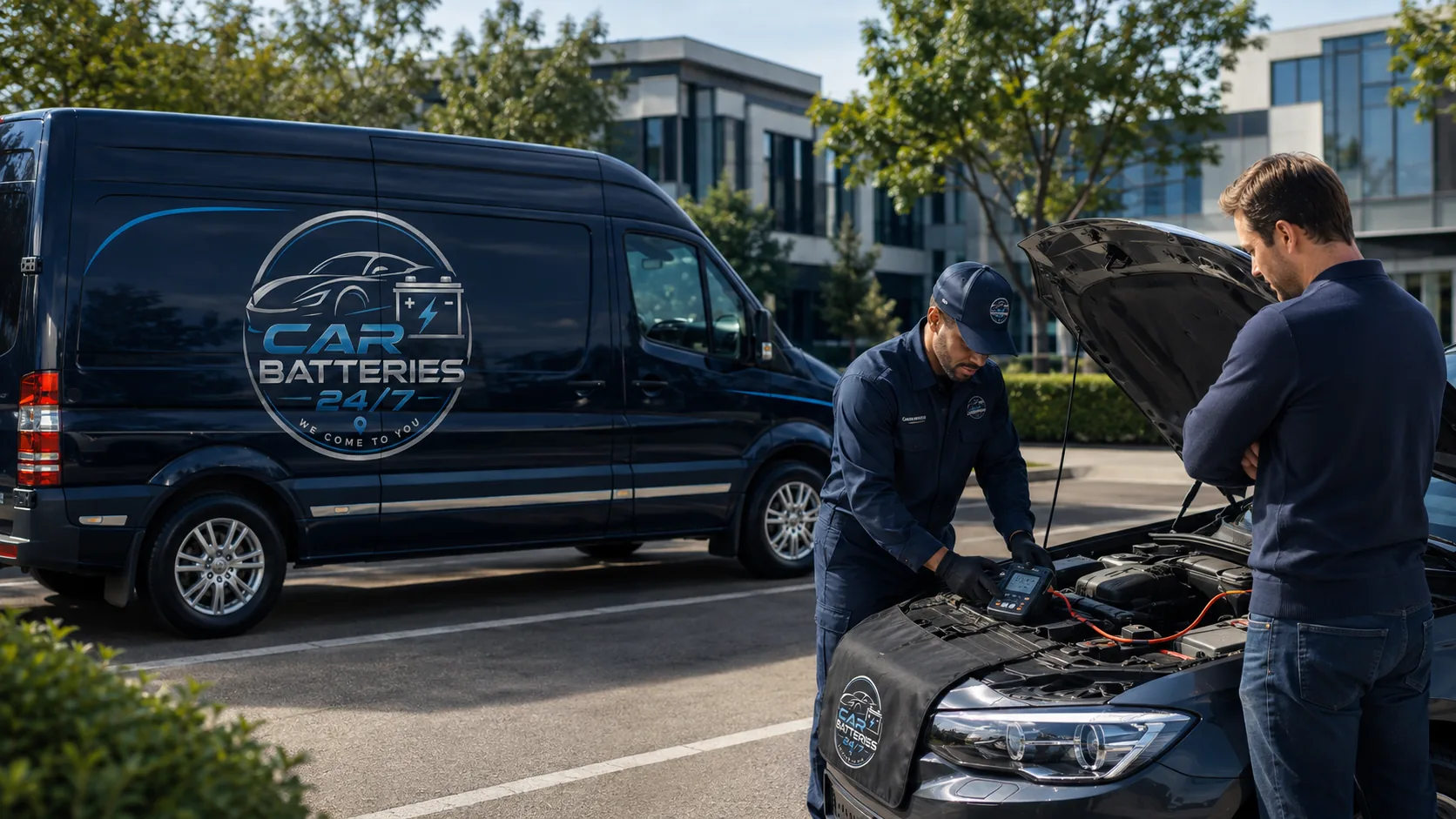

Why Car Battery Testing and a Battery Health Check Matter
Car battery testing and a practical battery health check help answer a more useful question than “Will the car start right now?” A vehicle can still start with a battery that is deteriorating, and a vehicle can fail to start even when the battery itself is not permanently damaged. A battery test, state-of-charge review and basic starting or charging observations help separate those situations.
Car Batteries 24/7 uses a test-first approach where practical because replacement should be based on the battery condition and vehicle requirements rather than a single symptom. Car battery testing is particularly useful after a jump start, after repeated flat-battery events or when starting has become slower or less consistent. It also helps customers compare car batteries based on need rather than guesswork.
Slow Cranking: A Common Reason for Car Battery Testing
When a starter motor turns the engine more slowly than normal, the battery may be struggling to supply the required current. Slow cranking can become more noticeable after the vehicle has stood overnight, during colder conditions or when electrical demand is high.
However, a poor cable connection, starter condition or engine-related issue can also affect cranking speed. That is why the symptom is a reason to test, not automatic proof that the battery needs replacement.
Repeated Flat Car Batteries Need Investigation
If a battery keeps going flat, repeated jump starts can hide the underlying problem. A weak battery may no longer hold useful charge, but the vehicle may also have a charging problem, a parasitic electrical drain, frequent short-trip use or an accessory that remains powered when parked.
Car batteries that repeatedly discharge need more than another boost. Car battery testing and basic charging observations can narrow down the issue. Advanced electrical drain testing, wiring diagnosis and complex alternator work may still require a specialist auto-electrician.
Battery State of Charge vs Battery Health
A battery can be low on charge without being permanently worn out. State of charge describes how much usable electrical energy is currently available, while battery health relates to the battery’s ability to store and deliver energy compared with when it was new.
This distinction matters because a deeply discharged battery may need charging before a meaningful battery health check conclusion can be made. Healthy car batteries and discharged car batteries can behave very differently under load. Replacing every low-charge battery would be unnecessary and expensive.
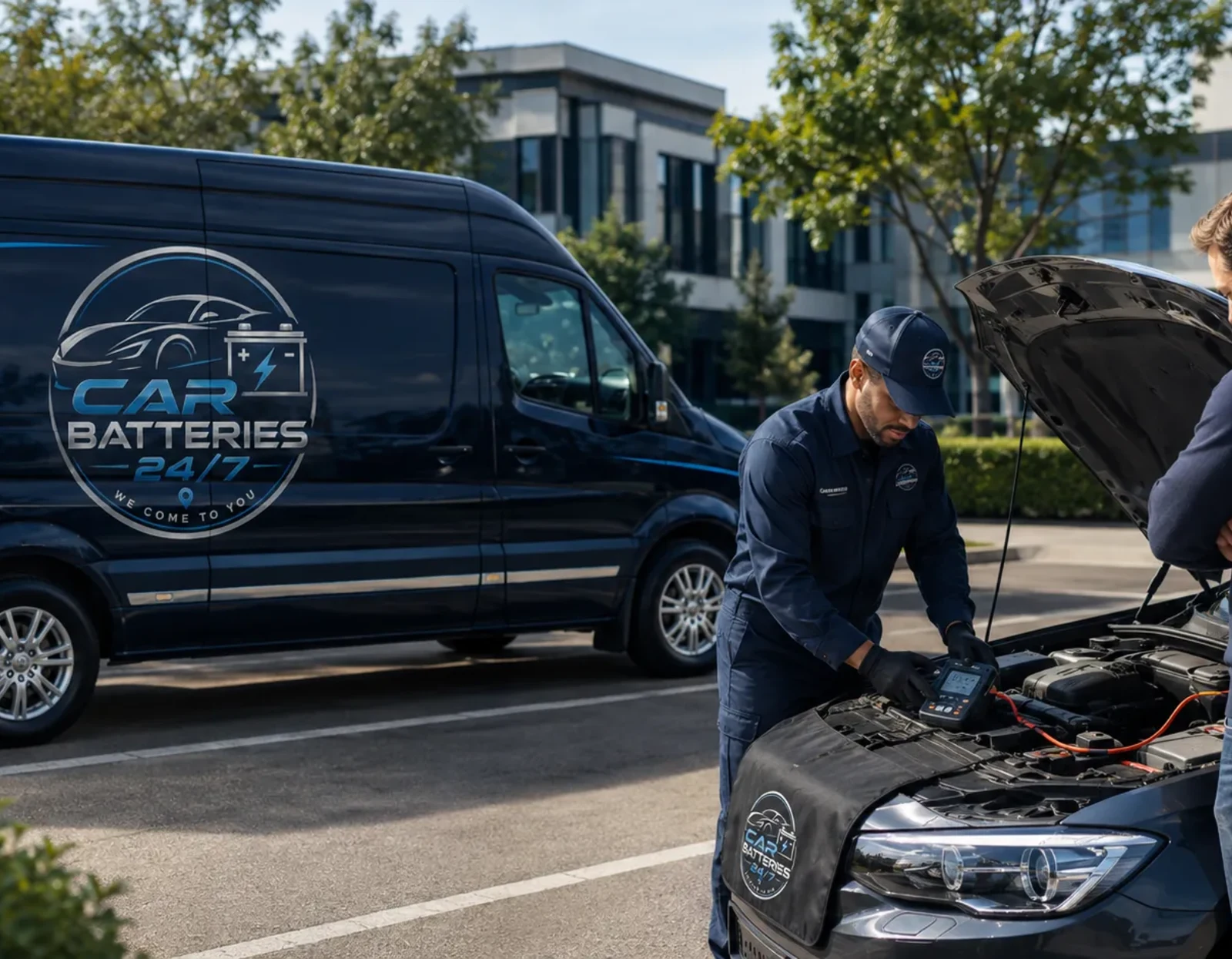
Battery Terminals and Connection Checks
Loose clamps, corrosion, contamination and damaged cable connections can interfere with both starting and charging. A connection problem can mimic a weak battery because voltage is lost across the resistance instead of reaching the starter or returning to the battery efficiently.
Visible terminal condition is therefore part of a sensible battery assessment. Minor safe attention may be possible during a mobile visit, while damaged cables, terminals or wiring can require specialist repair.
Basic Charging-System Observations
The alternator should replenish the battery while the engine is running. If charging output is obviously low, unstable or absent, a new battery may also become discharged. Basic charging-system checks can help identify when the battery is not the only concern.
These checks are not the same as full alternator diagnosis, voltage-drop testing or parasitic-drain investigation. If symptoms point beyond the battery service scope, further auto-electrical assessment is the correct next step.
When Should You Book Car Battery Testing?
Car battery testing is useful when starting feels slower than normal, the vehicle has required a jump start, the battery has gone flat more than once, the battery age is uncertain, the vehicle has been standing for a long period or there are changes in cranking behaviour. It can also be useful before a long trip or before a fleet vehicle develops a no-start problem.
For business fleets, planned battery checks can help identify weak batteries before they become an operational interruption. See the mobile car battery services page for current fleet-check options.
What a Battery Test Cannot Diagnose
A battery test cannot diagnose every reason a vehicle will not start. Fuel delivery, immobiliser faults, starter problems, damaged wiring, parasitic drains, advanced charging faults and mechanical issues may require different tools and expertise.
Good battery service includes knowing when not to sell a battery. If the results do not support replacement, the customer should be told that further mechanical or auto-electrical assessment may be needed.
Car Battery Testing Before Replacement
If car battery replacement is recommended, the next step is to confirm the correct battery specification and suitable car batteries. Vehicle make, model, year, engine, start-stop system, battery size, terminal layout, capacity and required technology all help determine a suitable replacement.
The AGM, EFB and start-stop battery guide explains why technology matters, while the which car battery do I need guide covers the compatibility information used to narrow down a replacement.
Car Battery Testing in Johannesburg
Mobile car battery testing for car batteries is available from Honeydew across the current approximate 30 km operating reference, including many suburbs across Roodepoort, Randburg and surrounding Johannesburg areas. Use the service-area checker or send a live location to confirm whether the vehicle is within the current coverage guide.
If the vehicle is in an unsafe traffic position, move to a safe location where possible or arrange recovery before battery work is attempted. Mobile testing is intended for safe, accessible locations.
Request a Battery Test or Quote
Send the vehicle make, model, year and engine where known, your suburb or live location, what happens when you try to start, whether the vehicle has recently needed a jump start and whether the battery repeatedly goes flat. This information helps prepare for the visit.
For current replacement pricing, see car battery prices. For a broader explanation of car batteries and common no-start symptoms, visit the Car Battery Help & Advice Guide.
Car Battery Testing Needs the Correct Battery Information
Reliable car battery testing depends on using the tester correctly. Where equipment asks for battery technology and rated cold-cranking performance, those details should be entered accurately rather than guessed. AGM, EFB and conventional flooded batteries are not identical, and a test configured for the wrong battery type can make the result less useful.
The battery state of charge also matters. A deeply discharged battery may need charging before a final conclusion can be made. A professional tester can provide measured information, but car battery testing still needs to be interpreted together with the vehicle symptoms, terminal condition, recent usage and charging behaviour.
What Car Battery Testing Can and Cannot Confirm
Car battery testing can help identify a battery that is performing poorly, a battery that should be recharged and retested, or an obvious charging concern. It cannot by itself prove that every no-start problem is caused by the battery. Starter-circuit faults, wiring resistance, immobiliser problems and mechanical or engine-management faults can create symptoms that require other diagnostic work.
If the engine cranks at normal speed but does not start, the battery may not be the main issue. If the battery tests well but cranking remains abnormal, further starting-system assessment may be necessary. This is why the battery, alternator and starter motor guide is useful alongside battery-test results.
Technical Reference for Hand-Held Battery Testers
For additional technical background, see VARTA’s guidance on using a hand-held battery tester correctly. The external guide reinforces an important principle: the battery technology, test standard and battery rating must be selected correctly for the result to be meaningful.
If testing indicates that replacement is appropriate, use our car battery prices guide for the information required for a vehicle-specific quote.
Car Battery Testing After a Vehicle Has Been Standing
When a vehicle has stood unused for an extended period, car battery testing should consider that the battery may simply be undercharged. A low state of charge can affect the usefulness of some test results. Charging and retesting may provide a clearer picture than immediately assuming that the battery has reached the end of its service life.
How the vehicle has been used matters. Frequent short journeys, long storage, heavy accessory use and repeated jump starts can all affect battery state of charge and the symptoms the customer experiences.
Car Battery Testing and Terminal Condition
Battery terminals and cable connections are part of the electrical path used during cranking and charging. Loose, contaminated or corroded connections can create voltage drop and intermittent symptoms. Car battery testing is more useful when obvious connection problems are considered rather than treating the battery as an isolated component.
Minor safe terminal attention may fall within the battery-service scope, but damaged cables, severe corrosion, broken clamps or wiring faults can require specialist repair.
Car Battery Testing Before a Long Trip
Drivers sometimes request car battery testing before a long trip because the battery age is uncertain or cranking has become slower. Testing can provide additional information, but no test can guarantee that a battery or vehicle will never fail. The result should be treated as a snapshot of the battery condition and available performance at the time of testing.
If the battery is already showing repeated no-start symptoms, the decision should consider both the measured result and the practical reliability required from the vehicle.
Car Battery Testing for Fleet Vehicles
Periodic car battery testing can also help fleet operators identify weak batteries before they become an avoidable call-out. A fleet check can record battery condition and obvious terminal concerns across multiple vehicles, with follow-up recommendations based on the results and vehicle requirements.
Fleet testing does not replace the vehicle manufacturer’s maintenance programme or full workshop inspection. It is a focused battery-health activity that can support preventive maintenance.
Car Battery Testing Results and Replacement Quotes
If the result supports replacement, the next step is to identify the correct battery specification. See which car battery do I need? for compatibility factors and car battery prices for a vehicle-specific quote. This keeps car battery testing connected to the actual vehicle rather than to a generic battery list.
Car Battery Testing Before Seasonal or Routine Maintenance
Car battery testing can be included as a focused preventive check when a battery is older, its service history is uncertain or starting performance has changed. The purpose is not to predict an exact failure date. It is to identify available signs that the battery may need attention before a complete no-start event.
Where a vehicle is serviced by a workshop, battery results can be considered alongside the broader maintenance inspection. A mobile battery test focuses on the battery and basic starting or charging observations rather than replacing the manufacturer’s full service schedule.
Car Battery Testing and Clear Customer Explanations
A useful car battery testing service should explain what the result means in plain language. If the battery is good, discharged, needs a retest or appears unsuitable for continued service, the customer should understand the recommended next step and any limitation of the test.
That explanation is central to the Car Batteries 24/7 approach: test where practical, explain clearly and replace only when the available evidence supports replacement.
Car Battery Testing After a Jump Start
Car battery testing after a jump start can help distinguish a one-off discharge from a battery that is no longer performing reliably. A successful jump start only confirms that external electrical assistance helped the engine crank; it does not establish the battery’s remaining capacity, state of charge or ability to restart the vehicle later.
If the battery was deeply discharged, charging and retesting may sometimes be appropriate before a final replacement decision. If the vehicle repeatedly needs assistance, the battery and basic charging behaviour deserve closer attention rather than relying on repeated boosts.
Car Battery Testing Before Buying a Replacement
Car battery testing is useful before a replacement purchase because a no-start complaint can involve more than the battery. Poor connections, charging concerns, starter problems and other electrical or mechanical faults can create similar symptoms. Testing does not diagnose every possible fault, but it can prevent an unnecessary battery purchase when the available evidence does not support replacement.
If replacement is supported, the next stage is vehicle-specific battery selection. See car battery replacement in Johannesburg for the mobile replacement process and car battery prices for the information needed to request a current quote.
What to Expect From Mobile Car Battery Testing
During mobile car battery testing, the exact checks depend on the vehicle, symptoms, battery condition and equipment available. Useful observations can include battery state of charge, test results, cranking behaviour, terminal condition and basic charging-system behaviour. Results should be interpreted together rather than treating one number as the entire diagnosis.
Where symptoms point beyond the battery, the customer may need an auto-electrician or workshop for advanced alternator diagnosis, parasitic-drain testing, starter-motor work, wiring repair or manufacturer-specific diagnostics. The battery vs alternator vs starter motor guide explains these boundaries in more detail.
Car Battery Testing for Vehicles That Stand for Long Periods
Vehicles that are parked for extended periods can develop low state of charge even when the battery is not yet permanently failed. Alarm systems, trackers, control modules and other standby loads continue to use small amounts of energy, while infrequent short journeys may not fully restore the charge used during starting.
Car battery testing can help establish whether the battery should first be charged and reassessed or whether deterioration makes replacement more appropriate. Customers should also consider the reason the vehicle became discharged so a new battery is not exposed to the same unresolved condition.
Book Car Battery Testing in the Johannesburg Service Area
Mobile car battery testing is available within the current operating reference from Honeydew across many Roodepoort, Randburg and surrounding Johannesburg localities, subject to exact location, safe access and operating availability. Use the service-area checker and send your vehicle details together with the symptoms you are experiencing.
The goal is straightforward: test first where practical, explain the result clearly and recommend replacement only when the battery condition and vehicle requirement support it. That approach gives the customer a more useful basis for deciding what to do next.
Frequently Asked Questions
What does a car battery test check?
The exact process depends on the equipment and circumstances, but useful checks can include battery condition, state of charge, cranking behaviour, terminal condition and basic charging output.
When should I have my car battery tested?
Testing is sensible when starting becomes slower than normal, the battery repeatedly goes flat, the vehicle has needed a jump start, warning symptoms appear or the battery is approaching an uncertain age.
Can a battery test tell if the alternator is faulty?
Battery testing and basic charging observations can reveal an obvious charging concern, but full alternator, wiring or auto-electrical diagnosis may require more specialised testing.
Can a battery be weak even if the car still starts?
Yes. A deteriorating battery can still start the vehicle under favourable conditions while showing reduced reserve or slower cranking. Testing can provide more information before complete failure.
Do dirty or loose terminals affect starting?
They can. Corrosion, contamination or looseness can increase resistance and interfere with reliable starting or charging, so terminal condition is worth checking.
Do you test before replacing a battery?
Where practical, yes. Car Batteries 24/7 uses a test-first approach because a no-start condition does not automatically mean the battery has failed.