Start-Stop Car Batteries: Why Battery Technology Matters
Start-stop car batteries are not all interchangeable with conventional batteries. Modern car batteries vary by technology, especially when comparing a standard battery, an EFB battery and an AGM battery. Standard flooded batteries, EFB batteries and AGM batteries are designed for different duty cycles and electrical demands. A battery can fit physically while still being the wrong technology or specification for the vehicle.
The correct replacement should therefore be based on vehicle-specific requirements, not simply price or case size. Start-stop systems, energy-management features and higher electrical loads make correct battery selection particularly important on many newer vehicles.
Standard Flooded Car Batteries vs EFB and AGM Batteries
Conventional flooded lead-acid batteries are widely used in vehicles that do not require enhanced start-stop duty cycles or another specific battery technology. They remain appropriate where the manufacturer specification allows them and where capacity, cold-cranking performance, dimensions and terminal layout match the vehicle.
Standard car batteries should not be used as a cheaper substitute where EFB or AGM technology is specified. The correct battery is the one that meets the vehicle requirement, not the one that happens to fit the battery tray.
What Is an EFB Battery for Start-Stop Cars?
EFB battery means Enhanced Flooded Battery. EFB technology is designed for more demanding cycling than a basic conventional flooded battery and is used in selected vehicles, including some start-stop applications.
If a vehicle is designed for an EFB battery, replacing it with an unsuitable standard battery can reduce performance and service life. Vehicle data, the existing battery specification and manufacturer information should be checked before changing battery technology.
What Is an AGM Battery for Modern Vehicles?
AGM battery means Absorbent Glass Mat. AGM batteries hold electrolyte in a glass mat structure and are used in selected higher-demand applications, including many vehicles with advanced start-stop and energy-management systems.
AGM battery options can cost more than conventional batteries, but the price difference reflects a different construction and application. If AGM is required, the relevant comparison is between suitable AGM options, not between AGM and an incompatible lower-specification battery.
Start-Stop Car Batteries
A start-stop battery must support repeated engine stop and restart events and the vehicle’s electrical systems during those cycles. Different vehicles use different battery technologies, commonly EFB or AGM depending on the design.
Do not assume that every start-stop vehicle uses AGM or that every EFB can be replaced with any AGM. The correct car batteries specification should be confirmed for the specific make, model, year, engine and electrical system.
Can You Replace AGM With a Normal Battery?
Where a vehicle requires AGM technology, downgrading to a conventional battery simply because it is cheaper can be unsuitable. The vehicle may have charging control, energy management and cycling demands that the replacement battery is expected to handle.
Some vehicles may also require battery registration, adaptation or coding after replacement. Where that work is outside current capability, it should be explained before fitment is confirmed.
Can You Replace EFB With AGM?
In some applications an AGM upgrade may be technically acceptable, while other vehicles have specific requirements. There is no universal rule that applies to every model. Vehicle-specific data is needed before changing battery type.
If you are unsure what the vehicle needs, use the which car battery do I need guide and send the vehicle make, model, year and engine information for a more accurate quote.
Battery Capacity, CCA and Physical Size Still Matter
Battery technology is only one part of the specification for car batteries. Ampere-hour capacity, cold-cranking performance, case size, height, hold-down arrangement, terminal positions and polarity can also matter. A correct AGM battery in the wrong size is still the wrong battery.
This is why vehicle-specific battery lookup and physical confirmation are useful before car battery replacement. The battery should meet both electrical and physical requirements.
Why Car Battery Prices Differ by Technology
Car battery prices vary with battery technology, capacity, performance, warranty, vehicle application and stock. AGM batteries are often priced differently from EFB or standard batteries because their construction and intended duty are different.
For a meaningful price comparison, compare batteries that are suitable for the same vehicle requirement. See the car battery prices guide for the information needed to request a current vehicle-specific quote.
AGM, EFB and Start-Stop Batteries in Johannesburg
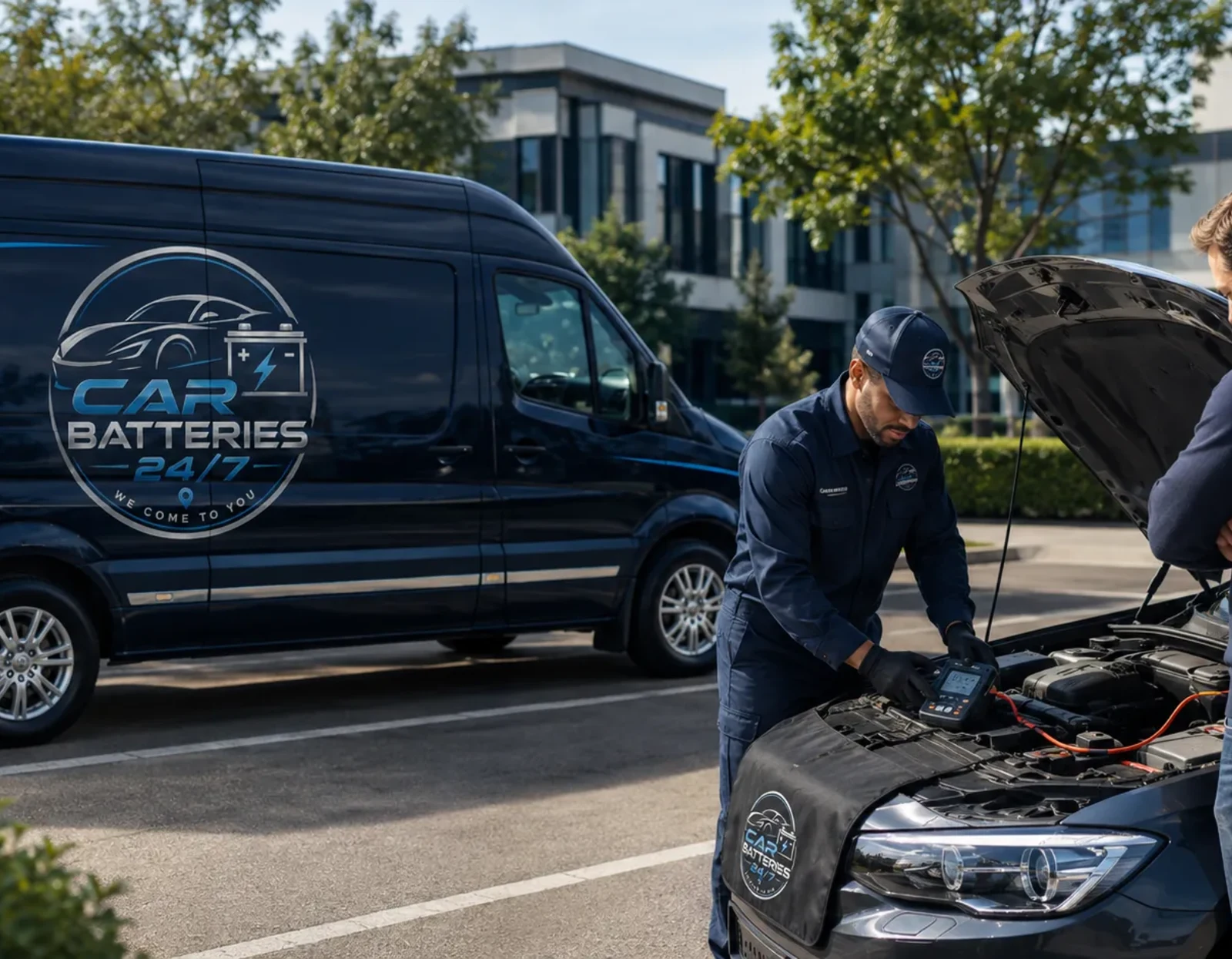
Car Batteries 24/7 provides mobile battery testing, delivery and replacement from Honeydew across the current approximate 30 km service-area reference, including many areas in Roodepoort, Randburg and surrounding Johannesburg suburbs.
Availability of a specific AGM battery, EFB battery or standard battery depends on the vehicle requirement and current stock. Use the service-area checker and send the vehicle details before a replacement is treated as confirmed.
Test Before You Replace
The fact that a vehicle has an AGM or EFB battery does not mean every no-start event requires a replacement. Battery condition, state of charge, terminals and charging behaviour should still be considered where practical.
Read the car battery testing guide for warning signs and the Car Battery Help & Advice Guide for a broader overview of testing, fitment, jump starts and mobile car batteries service.
Start-Stop Car Batteries Are Part of an Energy-Management System
Start-stop car batteries operate in vehicles that may stop and restart the engine repeatedly and may place greater cycling demands on the battery than a conventional vehicle. The correct battery technology is therefore not a cosmetic choice. Where the vehicle specifies EFB or AGM, the replacement should meet the approved technology and electrical requirements.
Some start-stop car batteries also work with battery monitoring or energy-management systems. Depending on the vehicle, battery replacement may involve a registration, reset or diagnostic procedure. Requirements vary by make, model, year and system design, so the presence of start-stop is a reason to check the vehicle rather than assume one universal procedure.
Start-Stop Car Batteries: AGM, EFB and Conventional Technology
AGM and EFB are both lead-acid battery technologies, but they are built for different operating demands. EFB is commonly used in selected entry-level start-stop applications, while AGM is used in selected higher-demand applications. Conventional flooded batteries remain appropriate for many vehicles that do not require enhanced cycling technology. None of these categories should be chosen solely because it is cheaper or more expensive.
When comparing start-stop car batteries, look at the complete vehicle requirement: technology, capacity, cold-cranking performance, dimensions, terminal arrangement and any manufacturer-specific replacement procedure. A battery can fit the tray and still be electrically unsuitable.
Independent AGM and EFB Technical Background
VARTA provides a useful explanation of EFB and AGM battery technology. It is a helpful technical reference when learning why different applications need different battery designs. For vehicle-specific guidance, use our which car battery do I need guide.
Start-Stop Car Batteries and Replacement Planning
Before a mobile replacement is confirmed, send the vehicle make, model, year, engine and whether start-stop is fitted. If you know the current battery technology or can safely provide a clear battery-label photo, include that information. This helps identify suitable start-stop car batteries, check stock and determine whether the vehicle may need a procedure beyond standard mobile fitment.
Read our battery registration and BMS guide for the distinction between fitting the correct battery and completing any vehicle-specific registration or adaptation that may be required.
Start-Stop Car Batteries and Frequent Engine Restarts
Start-stop car batteries are selected for vehicles whose electrical systems may place greater cycling demands on the battery. When the engine stops automatically at traffic lights and restarts repeatedly, the battery must support a duty cycle that can be more demanding than a conventional application. The vehicle manufacturer selects technology and capacity around that electrical strategy.
This is why replacing an EFB or AGM battery with a conventional flooded battery simply because the case fits can be a false economy. The battery needs to meet the vehicle’s intended performance requirements.
Start-Stop Car Batteries and Smart Charging
Some modern vehicles vary charging behaviour according to operating conditions, battery state and energy-management strategy. Start-stop car batteries may therefore operate as part of a wider system rather than as an isolated component. Vehicle-specific information is important when selecting a replacement and when deciding whether registration or adaptation is required.
One voltage reading should not be treated as a universal diagnosis for every smart-charging vehicle. The result must be interpreted in the context of the specific system.
Start-Stop Car Batteries: When the Existing Label Helps
The existing battery label can provide useful information such as AGM or EFB technology, capacity and cold-cranking rating. It is still worth checking the vehicle data because a previous replacement may not have been correct. For start-stop car batteries, the safest approach is to compare the current battery information with the vehicle requirement.
If the label is difficult to read, a clear photograph can be helpful, provided it can be taken safely without dismantling vehicle components.
Start-Stop Car Batteries and Battery Registration
Some vehicles require a diagnostic procedure after battery replacement. This can be described as registration, reset, adaptation or coding depending on the manufacturer and system. Not every vehicle needs the same process. A quote for start-stop car batteries should therefore identify any known procedure that affects the completion of the job.
Our battery registration and BMS guide explains why the requirement must be checked rather than assumed.
Start-Stop Car Batteries and Mobile Fitment
Mobile fitment can be suitable where the correct battery is available, the vehicle is safely accessible and any required procedure falls within current capability. Send the exact vehicle details before dispatch so suitable start-stop car batteries can be checked against stock.
Use the service-area checker for location and the car battery prices page for a current vehicle-specific quote.
Start-Stop Car Batteries and Correct Replacement Quotes
When requesting a quote for start-stop car batteries, provide the exact vehicle information rather than asking only for an AGM or EFB price. The correct technology still needs the correct physical size, capacity, cold-cranking rating and terminal layout. This prevents a price comparison between batteries that are not suitable alternatives.
See car battery prices for the quote process and which car battery do I need? for the compatibility checklist.
Start-Stop Car Batteries and Test-First Service
A vehicle fitted with EFB or AGM technology can still have a battery that is merely discharged rather than failed. Start-stop car batteries should be tested with the correct battery type and rating entered where the equipment requires it. Charging behaviour and vehicle symptoms should also be considered before replacement is recommended.
Use the car battery testing guide for more detail on how test results fit into the replacement decision.
Start-Stop Car Batteries in Everyday Driving
Vehicles with automatic engine stop-start operation can place different cycling demands on the battery from a conventional vehicle. Frequent urban trips, electrical accessories and repeated engine restarts are some of the reasons the specified battery technology matters. Start-stop car batteries should therefore be selected from the vehicle requirement rather than by case size or price alone.
If the vehicle has been standing for a long period or mostly completes short trips, a low state of charge can also affect performance. Testing can help distinguish a discharged battery from one that has deteriorated. Where the manufacturer specifies an EFB or AGM battery, use the required technology and confirm whether the vehicle has any battery-management or registration procedure before replacement is treated as complete.
Frequently Asked Questions
What is an AGM battery?
AGM stands for Absorbent Glass Mat. AGM batteries are used in selected higher-demand and start-stop applications where that technology is specified by the vehicle requirements.
What is an EFB battery?
EFB stands for Enhanced Flooded Battery. It is designed for a different duty cycle from a basic conventional flooded battery and is used in selected vehicles, including some start-stop applications.
Can I replace an AGM battery with a normal battery?
A lower or different battery technology should not be substituted simply because it fits physically. The replacement should meet the vehicle manufacturer requirements and electrical demands.
Can I replace an EFB battery with AGM?
Some applications may allow an upgrade, while others have specific requirements. Vehicle-specific information should be checked before changing battery technology.
How do I know if my vehicle has a start-stop battery?
The vehicle handbook, current battery label, manufacturer information or vehicle-specific battery data can help identify the required technology. If unsure, provide the make, model, year and engine details.
Why are AGM batteries often more expensive?
Battery technology, construction, capacity, performance requirements and application can affect pricing. Price should be compared only between batteries that are suitable for the same vehicle requirement.