Battery vs Alternator vs Starter Motor: Why a Car Won’t Start
Battery vs alternator vs starter motor is a useful way to understand many common no-start questions. When a vehicle will not start, the battery is an obvious suspect, but it is only one part of the starting and charging system. The battery stores electrical energy, the starter motor uses high current to turn the engine during cranking, and the alternator or charging system replenishes the battery once the engine is running. Connections, cables, control systems and other vehicle faults can also affect the result.
This means a customer searching for car batteries because the vehicle is clicking, cranking slowly or repeatedly going flat should not automatically be told that a replacement battery will fix the problem. The useful approach is to look at the symptoms, check what can reasonably be tested, explain the result and stay within the service scope.
What the Car Battery Does
The car battery provides stored electrical energy for starting and for vehicle systems when demand exceeds what the charging system is supplying. During engine cranking, the starter circuit can demand far more current than lights or accessories. That is why dashboard lights may still work even when the available battery power is not enough to crank the engine normally.
Battery condition is affected by age, temperature, state of charge, repeated deep discharge, vehicle usage and the electrical demands of the application. A battery that is simply discharged is not automatically the same as a battery that has deteriorated and can no longer provide useful starting performance.
What the Starter Motor Does
The starter motor turns the engine fast enough for the engine-management, ignition and fuel systems to begin normal operation. The starter circuit also depends on the battery, cables, terminals, relays or solenoids and vehicle controls. A starting problem can therefore exist even when the battery itself is serviceable.
Rapid clicking can be associated with low available voltage under load, while a single click with little or no cranking can have several possible causes. Complete silence can also have causes unrelated to battery failure. These patterns are clues, not stand-alone diagnoses.
What the Alternator and Charging System Do
Once the engine is running, the charging system supplies vehicle electrical loads and replenishes energy used from the battery. Modern charging strategies are not identical across all vehicles. Output can change with battery state, electrical demand, temperature and vehicle control strategy, so one voltage number should not be treated as a universal pass-or-fail rule for every car.
A basic charging-system observation can help identify an obvious concern, but advanced alternator, regulator, wiring, network or energy-management diagnosis may require specialist equipment and an auto-electrician or workshop.
Battery Testing Before Replacement
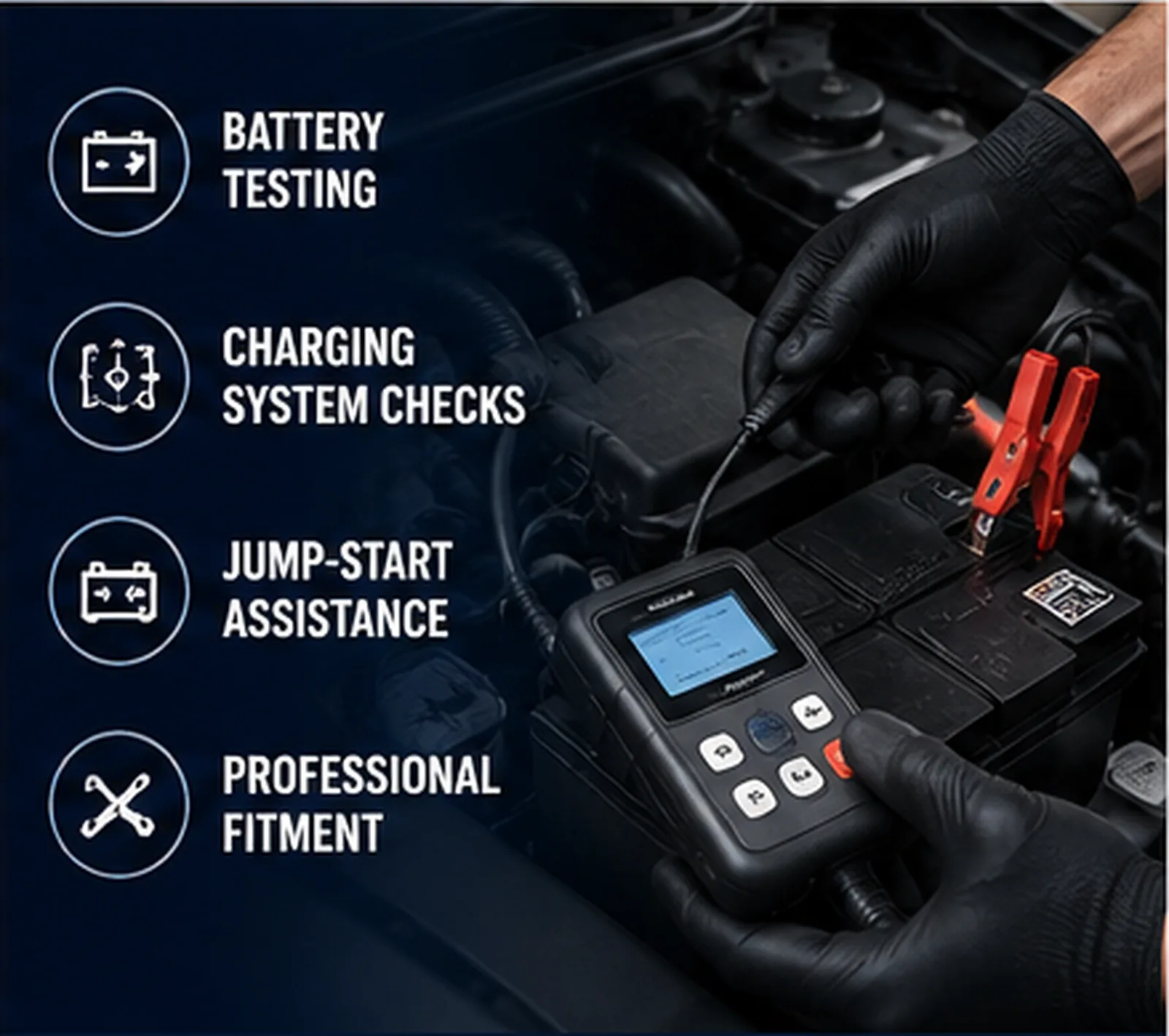
A professional battery tester can provide useful measured information when the correct battery type and rating are entered and the test is performed under suitable conditions. Depending on the equipment, results may indicate that the battery is good, needs charging and retesting, or should be replaced. Some equipment can also provide information about cranking or charging behaviour.
The machine does not replace judgement. The result still needs to be considered together with the vehicle symptoms, battery state of charge, terminal condition, battery specification and recent history. A battery that is deeply discharged may need charging before a meaningful retest can be made.
Read the car battery testing and warning signs guide for more detail on battery-condition checks and what repeated flat-battery events can mean.
Car Clicks but Won’t Start
If the vehicle clicks but does not crank normally, note whether the clicking is rapid or whether there is one heavier click. Also note whether dashboard lights dim dramatically, whether the car has recently needed a jump start and whether the battery terminals appear loose or heavily corroded.
Those observations help narrow the next step. A flat battery, poor battery connection or weak battery can produce clicking, but starter-circuit faults can create similar symptoms. Replacing the battery without supporting evidence can leave the original fault unresolved.
Car Cranks Slowly
Slow cranking can be associated with a weak or undercharged battery, excessive resistance in the starting circuit, starter-motor load, low temperature or other conditions. If cranking has gradually become slower over time, battery testing is useful before the vehicle reaches a complete no-start condition.
If the battery tests well but the cranking behaviour remains abnormal, further starting-system assessment may be needed outside a mobile battery replacement service.
Car Cranks Normally but Does Not Start
If the engine turns at normal speed but does not fire, the battery may not be the main problem. Fuel delivery, ignition, immobiliser systems, sensors, engine-management faults and mechanical issues can all produce a normal-crank no-start condition.
Car Batteries 24/7 does not position a new battery as the answer to every no-start. Where the vehicle cranks normally and battery checks do not support replacement, further mechanical or diagnostic assessment is more appropriate.
Car Starts With a Jump but Goes Flat Again
A successful jump start shows that external electrical assistance helped the vehicle start. It does not prove that the battery is healthy, and it does not prove that the alternator is faulty. If the battery becomes flat again, the useful next step is to consider battery condition, charging behaviour, connections, vehicle usage and possible electrical drains.
Repeated jump starts can mask the real issue. See the jump start and flat battery assistance guide for more information.
Can a Bad Alternator Flatten a New Battery?
Yes. If the vehicle is not replenishing the battery adequately, even a new battery can become undercharged. That does not mean every repeated flat battery is caused by the alternator; electrical drains, usage patterns, poor connections and other faults can also be responsible.
When a newly fitted battery repeatedly loses charge, the cause should be investigated rather than assuming another battery is needed.
What About Battery Terminals and Voltage Drop?
Loose, dirty or corroded connections can create resistance between the battery and the starter or charging system. Visual inspection and basic connection checks can therefore be valuable. More advanced voltage-drop testing can help identify excessive resistance in cables or connections, but it requires correct procedure and interpretation.
Damaged cables, significant corrosion, starter faults or wiring repairs may fall outside the normal mobile battery service and require specialist repair.
Where Car Batteries 24/7 Fits Into the Process
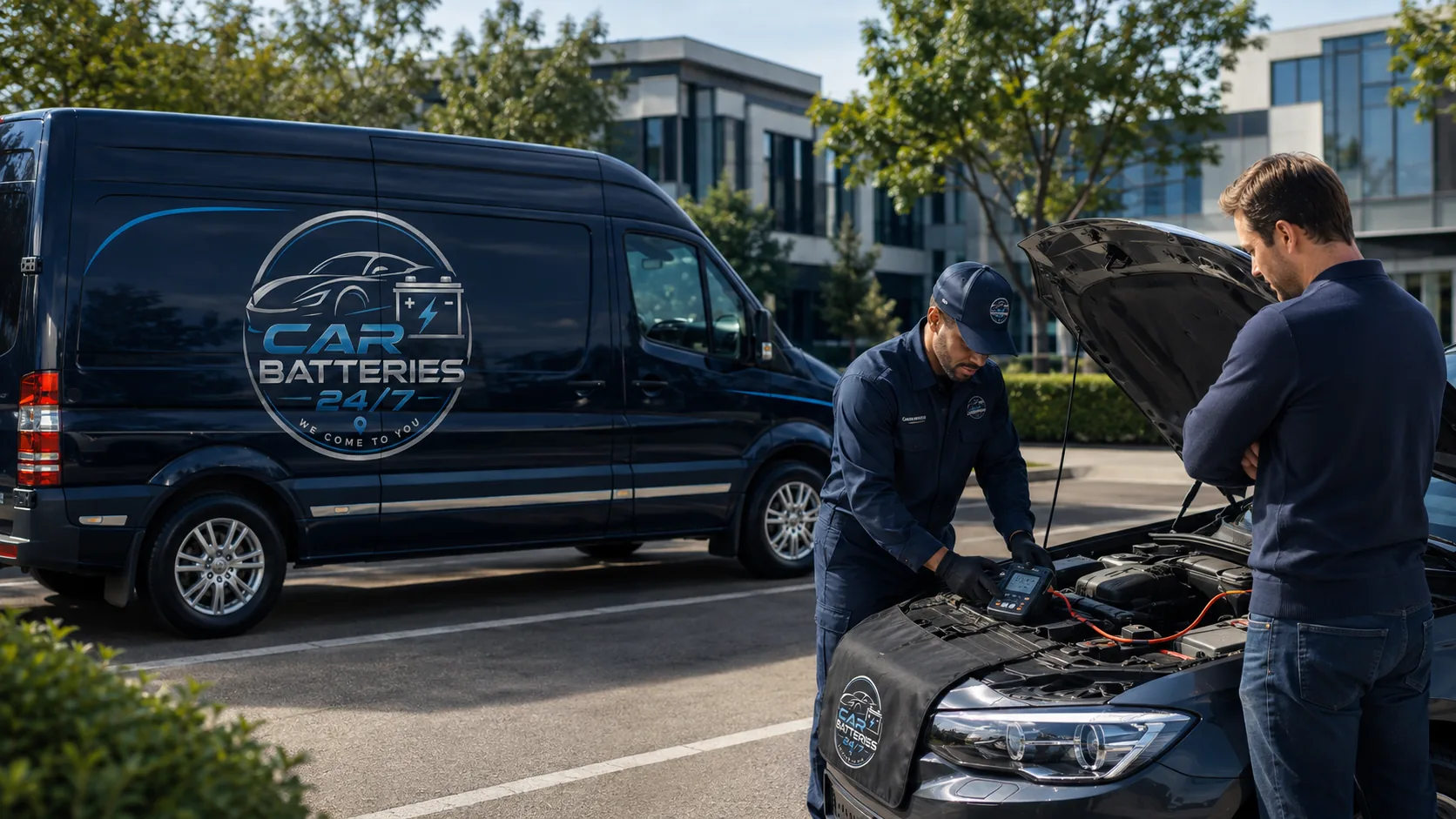
Car Batteries 24/7 focuses on car batteries, battery testing, mobile battery delivery, professional fitment, jump-start assistance where suitable, and basic observations of starting and charging behaviour. The goal is to identify when battery replacement is supported and when the symptoms point toward further assessment.
This service boundary matters. It allows a customer with a genuine battery problem to receive an efficient mobile solution while avoiding claims that a mobile battery visit replaces full auto-electrical or mechanical diagnosis.
What Information Should You Send?
Send the vehicle make, model, year and engine size where known, your current suburb or live location, whether the vehicle has start-stop technology if known, and what happens when you try to start. Mention rapid clicking, one click, slow cranking, no lights, normal cranking, recent jump starts, repeated flat-battery events or warning lights.
For vehicle-specific replacement information, visit which car battery do I need?. For pricing, use the car battery prices guide. To check location coverage, use the service-area checker.
Battery vs Alternator vs Starter Motor: Follow the Symptom
Battery vs alternator vs starter motor is not a diagnosis by itself; it is a useful comparison of three parts involved in starting and charging. Slow cranking may point toward available battery power or resistance in the starting circuit. Normal cranking with no engine start often points beyond the battery. A battery that repeatedly discharges after apparently normal driving can justify a closer look at charging behaviour and other electrical loads.
When discussing battery vs alternator vs starter motor, the sequence matters. The battery supplies stored energy, the starter uses a large amount of that energy during cranking, and the charging system replenishes the battery after the engine starts. Cables, grounds, relays, sensors and vehicle control systems connect these components, which is why similar symptoms can have different causes.
Battery vs Alternator vs Starter Motor Testing
A battery tester can provide useful information about battery condition when the correct battery type and rating are entered. Basic charging observations can identify an obvious concern. Starter behaviour can be observed during cranking. But a full battery vs alternator vs starter motor diagnosis can require current measurements, voltage-drop testing, scan-tool information or workshop-level electrical investigation.
Car Batteries 24/7 keeps the service boundary clear. Battery testing, battery replacement and basic starting or charging observations are within the mobile battery scope where practical. Advanced alternator, starter, wiring or control-system faults should be referred when the evidence points beyond the battery service.
Technical Reading for Starting and Charging Checks
VARTA’s guide to using a hand-held battery tester correctly is useful background on why tester setup and battery information matter. It supports the same principle used in this battery vs alternator vs starter motor guide: measured results are valuable, but they must be interpreted in the context of the vehicle.
If the battery itself is the likely concern, continue to our car battery testing guide or request a vehicle-specific quote through the car battery prices page.
Battery vs Alternator vs Starter Motor: Why Testing Comes First
The battery vs alternator vs starter motor question is best approached with evidence. Replacing a battery because the vehicle clicked once can miss a connection or starter problem. Blaming the alternator because a battery went flat can miss an old battery or an electrical drain. Observations and measured checks reduce unnecessary guessing.
Where the evidence points beyond the battery-service scope, the customer should be referred for appropriate auto-electrical or mechanical diagnosis.
Battery vs Alternator vs Starter Motor: What a Mobile Visit Can Show
A mobile battery visit can often establish useful information about battery vs alternator vs starter motor symptoms: battery condition, state of charge, terminal condition, cranking behaviour and basic charging observations. It is not a substitute for every workshop diagnostic test.
If the battery is suitable and tests well but the vehicle still will not crank normally, further starter-circuit investigation may be needed. If charging behaviour is abnormal, further alternator or electrical diagnosis may be appropriate.
Battery vs Alternator vs Starter Motor: Next Steps
Use the car battery testing guide if battery condition is the main question. Use the car battery prices guide if replacement is supported. The purpose of this battery vs alternator vs starter motor guide is to help customers understand why a test-first approach is more reliable than replacing parts by guesswork.
Frequently Asked Questions
What is the difference between the battery, starter motor and alternator?
The battery supplies electrical energy for starting, the starter motor uses that energy to turn the engine, and the charging system replenishes the battery while the engine is running. A fault in any part of that chain can create starting symptoms.
How do I know if the battery or alternator is the problem?
Symptoms overlap, so one symptom is not enough to diagnose the cause. Battery condition, state of charge, terminal connections and charging behaviour should be checked before deciding that the battery or alternator is responsible.
Can a bad alternator make a new battery go flat?
Yes, a charging-system problem can leave a replacement battery undercharged. Repeated discharge after replacement is a reason to investigate charging behaviour and other electrical causes rather than repeatedly fitting batteries.
What does rapid clicking when starting usually mean?
Rapid clicking can occur when available voltage drops during cranking, but poor connections and other starting-system faults can create similar symptoms. Testing helps narrow down the cause.
Can the starter motor be the problem if the lights still work?
Yes. Lights and accessories can operate while the starter circuit still has a problem. Battery state, cable connections and starter-system behaviour all need to be considered.
Do you provide full starter motor or alternator repairs?
Car Batteries 24/7 focuses on car batteries, battery testing, mobile replacement and basic starting or charging-system observations. Faults requiring advanced diagnosis, component repair or specialist electrical work may need an auto-electrician or workshop.