
Battery Registration, BMS and Modern Car Batteries
Modern vehicles can manage electrical energy very differently from older cars. Some monitor battery condition, current flow, state of charge or electrical demand and adjust charging behaviour accordingly. Depending on the vehicle, replacing car batteries can therefore involve more than matching the physical size and connecting the terminals.
The important point is that requirements vary. Not every modern vehicle needs battery registration, not every start-stop vehicle uses the same procedure, and the terms battery registration, battery coding and battery adaptation can refer to different manufacturer-specific processes. Vehicle information should be checked before promising a procedure.
What Is a Battery Management or Battery Monitoring System?
In automotive use, BMS can refer to a battery monitoring or battery management function that helps the vehicle understand electrical conditions and manage charging or power loads. Some vehicles use a sensor on or near the battery terminal, while others combine battery information with broader energy-management software.
The exact design differs between makes, models and years. A customer should therefore avoid assuming that every vehicle with a battery sensor requires the same replacement procedure.
What Is Battery Registration?
On vehicles that support or require it, battery registration is a procedure that tells the vehicle that a replacement battery has been installed. This can allow the energy-management system to reset learned information associated with the previous battery and manage the replacement appropriately.
Registration is not a universal requirement. It should be confirmed from reliable vehicle-specific information rather than performed or advertised by assumption.
Is Battery Coding the Same as Registration?
Not always. The language varies between manufacturers, diagnostic tools and workshops. On some vehicles a simple replacement registration is sufficient. On others, changing battery technology, capacity or approved specification can require configuration or adaptation steps in addition to recording that a new battery is present.
That is why a statement such as “all batteries need coding” is inaccurate, while “no batteries need coding” is also inaccurate. The correct answer depends on the vehicle.
AGM, EFB and Start-Stop Car Batteries
Start-stop and higher-demand vehicles commonly use battery technologies designed for repeated cycling and higher electrical demands. EFB batteries are used in selected applications, while AGM batteries are specified in others. The correct technology should follow the vehicle requirement.
A lower or different battery technology should not be fitted simply because it fits the tray or has similar dimensions. Battery type, capacity, cold-cranking performance, terminal layout and manufacturer requirements all matter. See the AGM, EFB and start-stop car batteries guide for a plain-language comparison.
Does Every Start-Stop Vehicle Need Battery Registration?
No. Start-stop capability is a strong reason to confirm the correct battery technology and replacement procedure, but the requirement for registration or coding still depends on the specific vehicle. Some systems may require a diagnostic step after replacement while others may not.
The safest approach is to identify the exact make, model, year and engine before finalising the battery and service scope.
Why the Correct Battery Specification Matters
Modern charging systems may be calibrated around the intended battery technology and capacity. Installing an unsuitable battery can reduce reliability, affect start-stop operation, shorten battery life or create charging behaviour that does not match the battery fitted.
Correct selection starts with vehicle data. If the existing battery label is available, it can provide additional clues, but it should not be the only source because a previous replacement may itself have been incorrect.

Can the Wrong Battery Cause Problems?
Yes. Problems can arise when the technology, capacity, physical size, terminal arrangement or electrical performance does not meet the vehicle requirement. A battery may physically fit but still be unsuitable for the electrical system.
This is one reason Car Batteries 24/7 asks for vehicle details before confirming a quote. The objective is not simply to supply a battery that fits the space; it is to identify a suitable replacement among available car batteries.
Do BMW, Mercedes-Benz, Audi, Volkswagen, Volvo, Ford or Toyota Vehicles Need Registration?
Some vehicles from these and other manufacturers use battery monitoring, smart charging or energy-management systems, but the requirement is not determined by badge alone. It can vary by model, year, engine, equipment level and battery system. Brand lists should therefore be treated as a prompt to check the vehicle, not as proof that every vehicle from that manufacturer needs coding or registration.
What Diagnostic Equipment May Be Needed?
Where a vehicle requires battery registration, adaptation or configuration, compatible diagnostic equipment and correct vehicle-specific procedures are needed. The tool must support the vehicle and the technician must understand what the procedure changes. A generic battery tester is not automatically the same as a diagnostic scan tool capable of vehicle coding or registration.
Car Batteries 24/7 should only confirm a registration or coding service when the required equipment, procedure and current capability are available for that vehicle.
What If Registration or Coding Is Outside Current Capability?
The customer should be told before the battery is fitted. Depending on the vehicle, the appropriate next step may be to arrange the required diagnostic procedure with a suitably equipped specialist or choose a service route that can complete the replacement process correctly.
This transparent limitation is better than presenting a basic battery installation as complete when the vehicle requires an additional manufacturer-specific procedure.
Battery Testing on Modern Vehicles
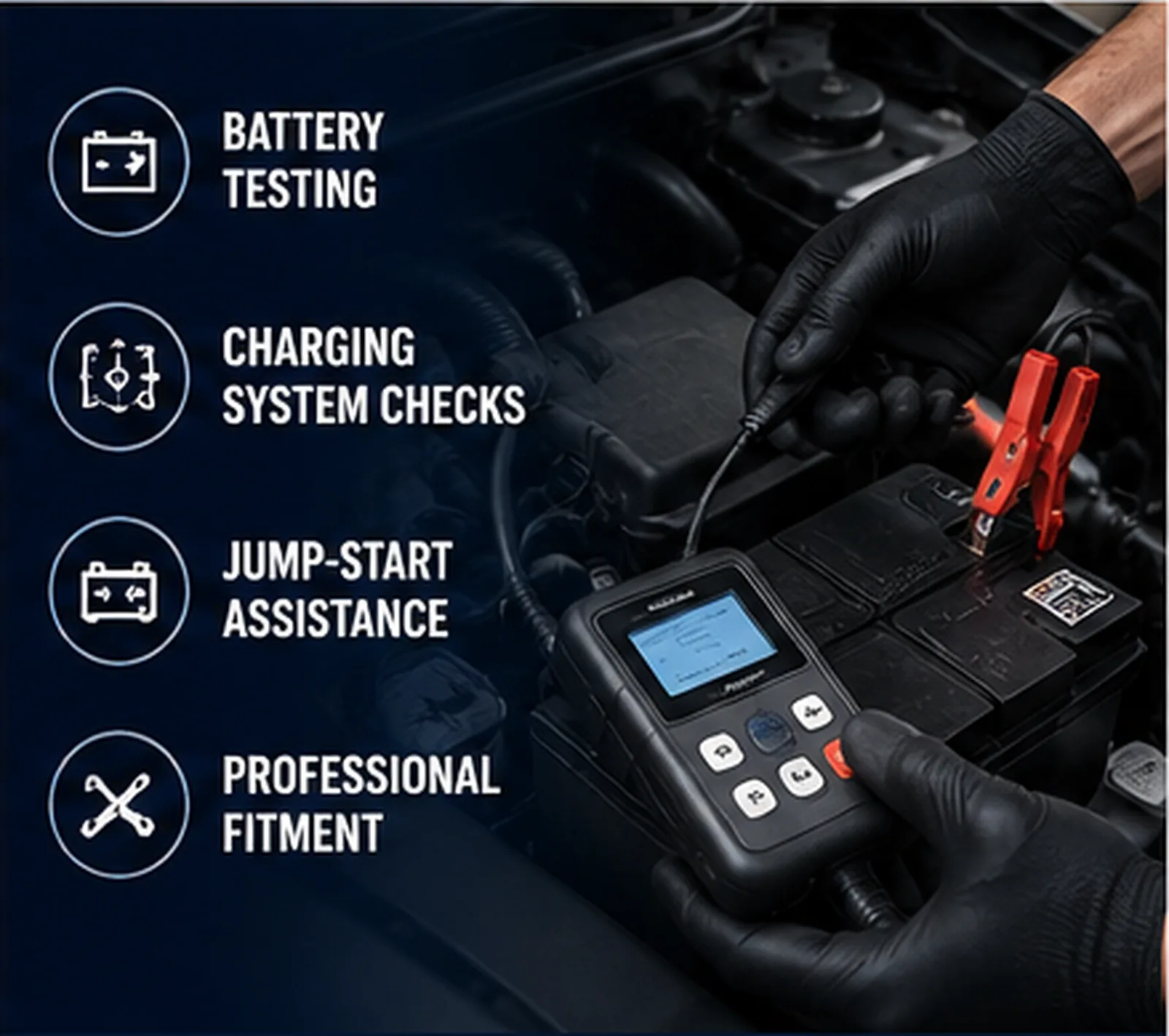
Battery testing remains useful, but the result should be interpreted in context. The correct battery type and rating should be entered where required, the state of charge should be considered, and vehicle energy-management behaviour may influence what is observed. A professional tester can provide valuable measured information, but it does not replace vehicle-specific knowledge.
Read the car battery testing guide for warning signs, testing limitations and the difference between a discharged battery and a battery that may need replacement.
Which Car Battery Do I Need?
For modern vehicles, send the make, model, year and engine size where known, whether the vehicle has start-stop, your current battery details if available and your location. If the battery is difficult to access or the vehicle has an unusual electrical setup, mention that as well.
Use the which car battery do I need guide for size, CCA, capacity, terminals and technology, then use the car battery prices guide for a vehicle-specific quote.
Battery Registration and Mobile Fitment in Johannesburg
Car Batteries 24/7 operates from Honeydew across an approximate 30 km service-area reference covering many genuine suburbs in Roodepoort, Randburg and surrounding Johannesburg areas. Mobile fitment remains subject to the exact vehicle, battery specification, location, safe access, suitable stock and the technical requirements of the replacement.
Where the vehicle can be serviced within current capability, a mobile solution may be arranged. Where specialist registration, coding or advanced diagnosis is required, that requirement should be identified and explained rather than hidden.
Battery Registration Depends on the Vehicle
Battery registration is used on selected vehicles to record that a replacement battery has been installed. The procedure can allow the vehicle’s energy-management strategy to reset information associated with the previous battery. Other vehicles do not require the same step, so the requirement should be checked from vehicle-specific technical information.
The terms battery registration, coding, adaptation and reset are sometimes used as though they mean the same thing. They do not always. Some vehicles only record that a new battery is present; others may need configuration when the approved battery technology or capacity changes. This is why the correct procedure cannot be inferred from the brand badge alone.
Battery Registration After AGM or EFB Replacement
Where a vehicle specifies AGM or EFB technology, fitting the correct physical size is only part of the replacement. The technology, capacity, cold-cranking performance and vehicle energy-management requirements must also be respected. If battery registration or another diagnostic procedure is required, that should be identified before the job is presented as complete.
VARTA provides useful technical background on replacing EFB and AGM batteries in start-stop vehicles, including the importance of following vehicle-specific replacement procedures.
When Mobile Battery Registration Is Not Available
Car Batteries 24/7 should only confirm battery registration when compatible diagnostic equipment, the correct procedure and current technician capability are available for the specific vehicle. If the battery can be supplied but the required registration or coding cannot be completed, that limitation should be explained before fitment.
This protects the customer from assuming that all modern-vehicle battery work is identical. For battery technology, see our AGM, EFB and start-stop guide. For battery selection, use the which car battery do I need guide.
Battery Registration and the Correct Replacement Specification
Battery registration does not make an incorrect battery correct. The replacement still needs to meet the required technology, capacity, cold-cranking performance, dimensions and terminal layout. Registration or adaptation is an additional vehicle-specific procedure where applicable, not a substitute for correct battery selection.
For this reason, the vehicle must be identified accurately before the battery and procedure are confirmed.
Battery Registration When Battery Capacity Changes
Some vehicle systems distinguish between approved battery types or capacities. If a replacement differs from the previous approved specification, the procedure may involve more than simply recording that a new battery has been fitted. Battery registration requirements therefore need to be checked against the exact vehicle and diagnostic information.
Changing battery specification should not be done solely because another battery is cheaper or immediately available.
Battery Registration and Diagnostic Tool Compatibility
A generic battery tester and a diagnostic scan tool do different jobs. A tester can assess battery condition, while battery registration may require equipment that can communicate with the relevant vehicle control system. The tool also needs to support the exact make, model and procedure.
Owning a scan tool does not automatically mean every registration or coding function is supported, which is why capability should be confirmed before promising the service.
Battery Registration After Mobile Fitment
If battery registration is required and can be completed with the available equipment, the procedure can form part of the planned replacement. If it cannot be completed, the customer should know beforehand so an appropriate specialist route can be arranged.
For battery compatibility, see which car battery do I need?. For AGM and EFB technology, see the start-stop car batteries guide.
Battery Registration Questions to Ask Before Replacement
Useful questions include whether the vehicle has start-stop, whether the current battery is AGM or EFB, whether the vehicle uses a battery sensor, whether the replacement capacity is changing and whether the exact vehicle is supported by the diagnostic equipment. These questions help determine whether battery registration is part of the job.
Send the vehicle make, model, year and engine before a modern-vehicle battery replacement is treated as confirmed.
Battery Registration and Customer Confirmation
Before a modern-vehicle replacement is confirmed, the customer should know whether battery registration is expected, whether it is included in the planned service and what happens if the vehicle requires a procedure outside current capability. Clear scope avoids a situation where a battery is physically fitted but an additional required step is discovered afterward.
For mobile assistance, send the full vehicle details and location so both the battery specification and the practical service requirements can be reviewed before dispatch.
Frequently Asked Questions
What is battery registration?
Battery registration is a vehicle-specific procedure used on some vehicles to tell the battery-management or energy-management system that a replacement battery has been installed. Not every vehicle requires it.
Is battery registration the same as battery coding?
The terms are sometimes used loosely. Depending on the vehicle, a procedure may record a replacement, update battery characteristics, or configure the system for a different approved battery type. The correct procedure depends on the manufacturer and model.
Does every start-stop vehicle need battery registration?
No. Start-stop vehicles often require the correct EFB or AGM technology, but registration or coding requirements vary by make, model, year and system design.
What is a BMS in a car?
In this context, BMS commonly refers to a battery monitoring or battery management function that tracks electrical conditions and helps the vehicle manage charging and loads. The exact system differs between vehicles.
Can I fit a normal battery instead of AGM or EFB?
A lower or different technology should not be fitted simply because it fits physically. The replacement should meet the vehicle specification and electrical requirements.
What happens if my vehicle needs registration or coding that you cannot perform?
The limitation should be explained before work proceeds. Where required procedures fall outside current capability, Car Batteries 24/7 can avoid presenting a simple battery fitment as a complete solution and recommend appropriate specialist assistance.