Car Batteries Help: A Practical Guide for Johannesburg Drivers
Car batteries are simple to describe but easy to misunderstand. Good car battery help should make a no-start situation easier to understand, not push a replacement before the evidence supports it. When a vehicle will not start, many drivers immediately assume the battery has failed. Sometimes that is correct, but a flat battery can also be the result of discharge, loose or corroded connections, an obvious charging concern, repeated short trips, a light or accessory left on, or another electrical or mechanical issue. This guide brings together the main questions customers ask before battery testing, delivery, replacement or professional fitment.
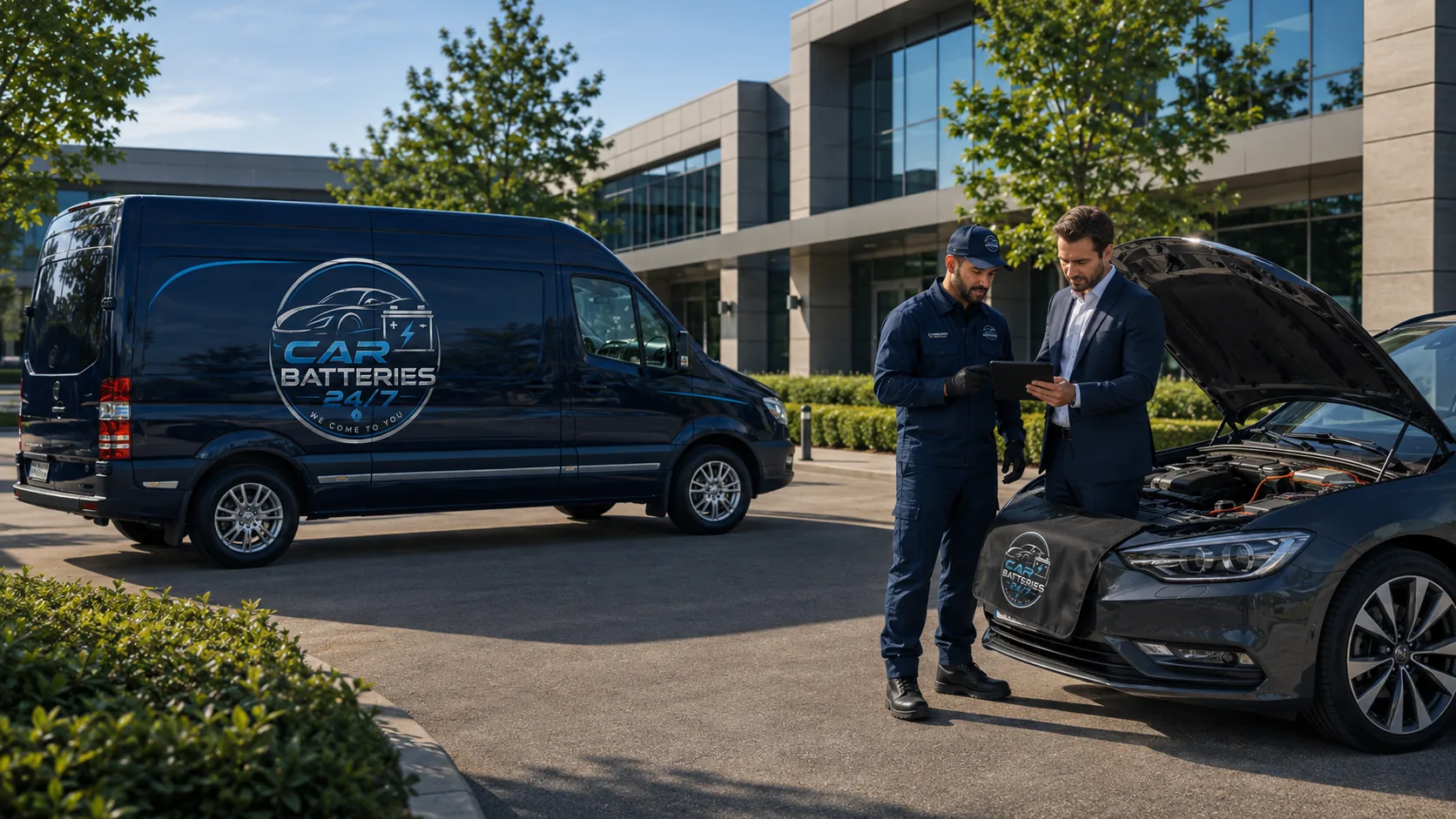
Car Batteries 24/7 operates from Honeydew across an approximate 30 km service-area reference covering many genuine suburbs in Roodepoort, Randburg and surrounding Johannesburg areas. The service is mobile: where suitable, testing, battery delivery and professional fitment can be arranged at a home, workplace or other accessible location. Exact attendance remains subject to location, safe access, operating availability, vehicle requirements and suitable stock.
When Should You Suspect a Car Battery Problem?
Common warning signs include slower cranking than normal, rapid clicking when the key or start button is used, intermittent starting, dim lights during cranking, repeated flat-battery events or a vehicle that starts only after external assistance. These symptoms can point toward the battery, but none of them proves battery failure on its own.
If the vehicle has recently been jump-started and then goes flat again, repeated jump starts are not a long-term diagnosis. The battery may be weak, it may simply be discharged, or the vehicle may not be charging the battery properly. Our flat battery and car won’t start guide explains the most common symptom patterns in more detail.
Car Battery Testing Before Replacement
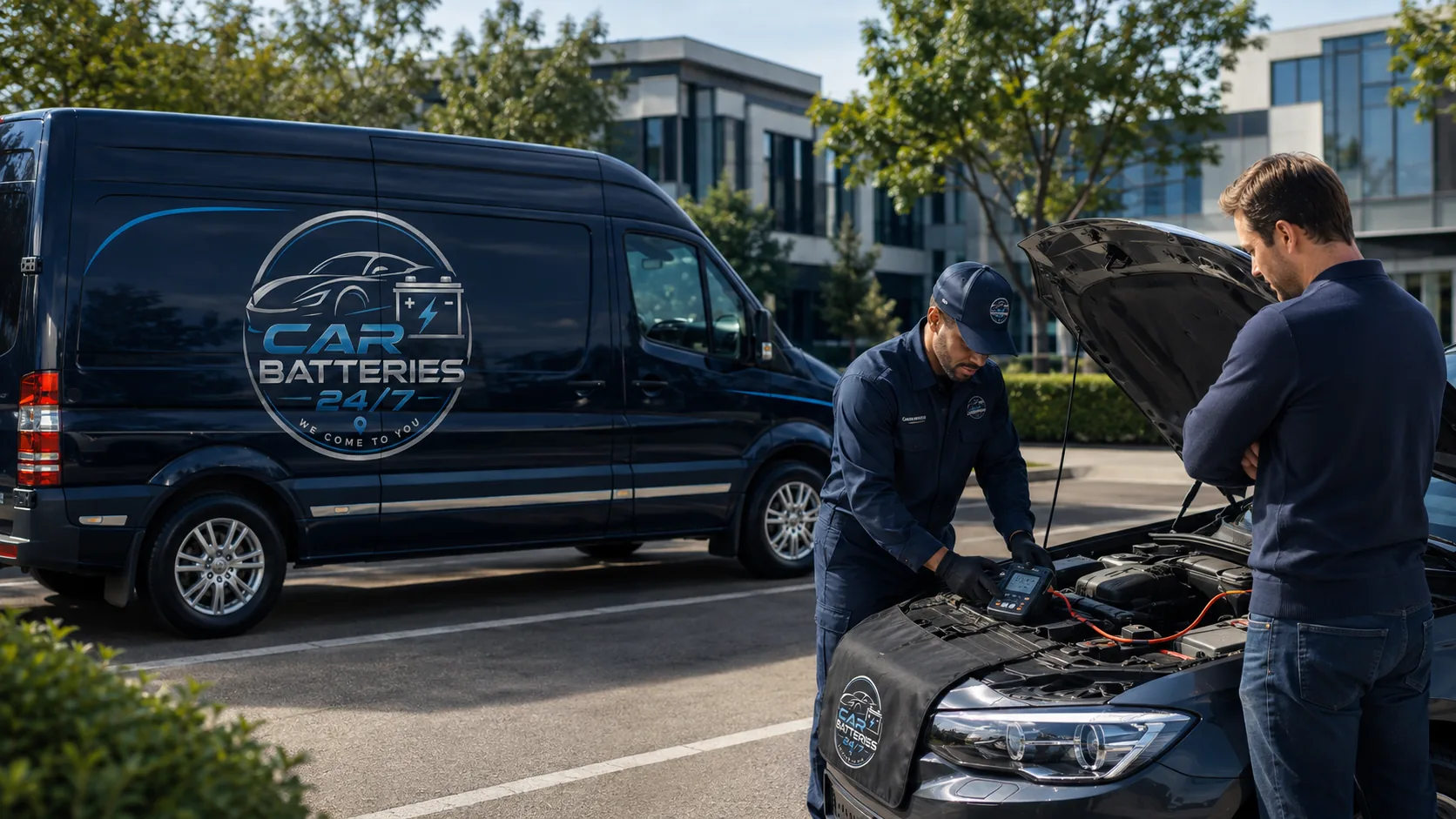
Car battery testing is useful because it helps make the next step evidence-based. Where practical, battery condition, state of charge, terminal condition, cranking symptoms and basic charging behaviour can be considered before replacement is recommended. This does not turn a mobile battery visit into a full auto-electrical diagnosis, but it can help avoid replacing a battery simply because the car would not start once.
A battery can also be too discharged to give a useful conclusion immediately. In some situations, charging and retesting may be more sensible than making an instant replacement decision. Read the dedicated car battery testing and warning signs guide for more detail on what battery symptoms can mean.
Car Battery Replacement and Professional Fitment
If replacement is appropriate, the correct battery must match the vehicle requirements. Important factors can include battery technology, capacity, cold-cranking performance, physical dimensions, terminal layout, polarity, start-stop requirements and manufacturer-specific electrical needs. Two batteries can look similar while being materially different.
For mobile car battery replacement, Car Batteries 24/7 first uses the vehicle information to narrow down the likely specification and suitable stock. Once the correct option and current quote are confirmed, delivery and professional fitment can be arranged where the location and vehicle are suitable. If coding, registration or advanced diagnostic work is required outside current capability, that limitation should be identified before work proceeds.
Car Battery Delivery at Home or Work
Car battery delivery is useful when the vehicle is parked at home, at work or at another accessible location and cannot be conveniently driven elsewhere. Mobile assistance does not mean every battery fits every car; the same compatibility checks still matter. The vehicle make, model, year and engine size are therefore useful before dispatch.
Customers should also mention basement parking, security access, tight parking spaces, unusual battery locations or other practical issues that may affect a mobile visit. The mobile car battery services page explains the testing, delivery, replacement, fitment, charging checks and fleet services currently offered.
Car Battery Prices: Why One Price Does Not Fit Every Vehicle
Car battery prices differ because vehicles do not all use the same battery. Standard, EFB and AGM technologies can have different applications and costs. Capacity, cold-cranking performance, size, terminal arrangement, warranty and current stock can also influence a quote. A useful comparison therefore needs to compare batteries that are actually suitable for the same vehicle.
For a current price, send the make, model, year and engine details where known, together with the location. The car battery prices guide explains what information is needed for a vehicle-specific quote and why the cheapest battery is not automatically the correct battery.

Standard, EFB and AGM Car Batteries
Standard flooded batteries remain suitable for many conventional vehicles where that technology meets the vehicle requirement. EFB batteries are designed for a different duty cycle and are used in selected vehicles, including some start-stop applications. AGM batteries are used in selected higher-demand and start-stop applications where AGM technology is specified.
It is not good practice to downgrade from a required AGM or EFB battery simply because a conventional battery fits the tray. Likewise, an expensive battery is not automatically better if it is the wrong specification. The dedicated AGM, EFB and start-stop car battery guide explains these technologies in plain language.
Which Car Battery Do I Need for My Vehicle?
If you are asking which car battery do I need, start with the vehicle rather than the battery shelf. Make, model, year and engine size narrow down the likely battery group. Start-stop technology, physical dimensions, terminal positions, cold-cranking amps and ampere-hour capacity can then help confirm the correct option.
The existing battery label can be useful, but it should not be treated as proof that the current battery is correct. Vehicles are sometimes fitted with unsuitable batteries during previous replacements. Use our which car battery do I need guide for a practical checklist of the details that matter.
Flat Battery, Dead Battery or Car Won’t Start?
A flat battery describes a battery with insufficient charge to perform normally, while drivers often use dead battery to describe anything from a heavily discharged battery to one that will no longer hold useful charge. A car that won’t start may have a battery issue, but it may also have a starter, connection, fuel, immobiliser or other problem.
The sound and behaviour are useful clues. Rapid clicking, one heavy click, slow cranking, complete silence or normal cranking without the engine firing can point in different directions. Battery-related mobile assistance is appropriate only where the symptoms and checks support it.
Jump Start Assistance and What It Can Tell You
A jump start may be appropriate for some vehicles when the battery is too discharged to crank the engine normally. However, a successful jump start does not prove the battery is healthy. It simply shows that external electrical assistance helped the starting process.
If the battery goes flat again shortly afterwards, the vehicle needs more than another boost. Battery condition, charging output, usage pattern and possible electrical drain may need attention. See the jump start and flat battery assistance guide for practical limitations and safety considerations.
Battery Terminals, Corrosion and Connections
Battery terminals and cable connections are part of the starting and charging path. Loose clamps, corrosion, contamination or damaged connections can increase resistance and contribute to intermittent starting or charging symptoms. A battery can test reasonably while a poor connection still causes trouble.
Visible corrosion should be treated carefully, and any repair beyond minor safe terminal attention may require an auto-electrician or workshop. The goal is to identify what is within the mobile battery service scope and explain when specialist work is more appropriate.
Basic Charging-System Checks
The alternator and charging system replenish the battery while the vehicle is running. If charging output is obviously low or unstable, replacing the battery alone may not solve repeated discharge. Basic charging observations can help identify when further auto-electrical testing should be recommended.
Advanced alternator diagnosis, parasitic-drain testing, voltage-drop analysis and complex wiring fault tracing fall outside a simple mobile battery replacement visit. Clear service boundaries are important because a battery should not be used as a guess for an unrelated electrical fault.
How Long Do Car Batteries Last?
There is no single lifespan that applies to all car batteries. Battery life is influenced by battery quality, vehicle electrical demand, climate, driving pattern, charging behaviour, vibration, periods of storage and how deeply the battery is discharged over time. A battery that is repeatedly run flat can age differently from one that remains properly charged.
Age is therefore useful context, not a diagnosis by itself. If an older battery is still starting the vehicle normally, testing can provide more information before replacement. If a newer battery repeatedly goes flat, the cause may be outside the battery itself and should not be ignored.
What Can Shorten Car Battery Life?
Repeated deep discharge, long periods without use, frequent very short trips, loose hold-downs, poor terminal connections and charging-system problems can all contribute to battery trouble. High electrical demand while the vehicle is parked can also leave car batteries at a low state of charge.
Preventative care is mostly about recognising changes early. If cranking becomes slower, the battery needs repeated boosts or connections show visible corrosion, it is better to investigate before the vehicle becomes completely immobile.
Mobile Car Battery Service: What Usually Happens?
A useful mobile process starts with the vehicle details, location and symptoms. The likely battery requirement and service-area availability can then be reviewed before attendance. At the vehicle, testing and basic observations help decide whether the next step is charging, replacement or further assessment.
If replacement is appropriate, suitable car batteries are matched to the vehicle requirement and the current quote is confirmed before fitment. The aim is a clear sequence: understand the symptoms, test where practical, identify the correct battery, confirm the price and then complete professional fitment where suitable.
Car Batteries for Fleets and Business Vehicles
Fleet vehicles can benefit from planned battery checks because a no-start event can interrupt staff schedules, deliveries or service work. Periodic testing of car batteries can help identify vehicles showing weak-battery symptoms before they become an operational problem.
Fleet battery checks do not replace full vehicle maintenance. They are a focused way to review battery condition, obvious terminal concerns and basic starting or charging behaviour across several vehicles at one location. Current fleet options are described on the mobile car battery services page.
When You Need an Auto-Electrician or Workshop
Some faults sit outside mobile battery service. Complex parasitic-drain testing, starter-motor diagnosis, wiring repairs, advanced alternator diagnosis, control-module faults, battery coding on unsupported vehicles and high-voltage hybrid or electric battery systems may need specialist equipment or workshop access.
Good battery advice includes recognising those limits. If the evidence does not point to the 12-volt battery, replacing car batteries repeatedly is not a sensible repair strategy. The customer should be directed toward the type of assessment the vehicle actually needs.
Car Batteries in Honeydew, Roodepoort, Randburg and Johannesburg
Local searches such as car batteries Johannesburg, car battery Roodepoort, car battery Randburg or battery delivery Honeydew are useful because customers generally need help where the vehicle is actually parked. The current operating reference is centred on Honeydew and includes many genuine suburbs across Roodepoort, Randburg, Northcliff, Fourways, Bryanston, Sandton, Krugersdorp and surrounding Johannesburg areas.
Rather than publishing hundreds of thin suburb pages, Car Batteries 24/7 uses one searchable location database. Check the mobile car battery service-area page or send a live location. A geographic match is a guide and does not guarantee dispatch, arrival time or stock.

What to Send When You Need Battery Assistance
For the quickest review, send the vehicle make, model, year and engine size where known; whether it has start-stop technology if known; your suburb or live location; what happens when you try to start; whether the vehicle has recently been jump-started; and any battery warning lights or unusual symptoms. If you can safely read the existing battery label, a clear photo can also help.
Do not guess the battery technology or order only by appearance. Vehicle-specific information is more useful. If the vehicle is in an unsafe traffic position, move to safety where possible or arrange appropriate recovery before battery work is attempted. For general South African road-safety information, see the Department of Transport.
Useful Car Battery Guides
Use the flat battery and car won’t start guide for urgent symptom questions, the battery testing guide for warning signs, the AGM and EFB guide for battery technology, the battery compatibility guide when choosing a replacement, and the jump-start guide when a vehicle needs external starting assistance.
For commercial information, visit mobile car battery services, car battery prices or the service-area and assistance page. You can also return to the Car Batteries 24/7 home page.
Battery, Alternator or Starter Motor?
The starting process depends on more than the battery. The battery provides electrical energy, the starter motor turns the engine during cranking, and the charging system replenishes the battery while the engine is running. A problem in any part of that chain can create a no-start or repeated flat-battery complaint.
Because the symptoms overlap, Car Batteries 24/7 does not treat every no-start as proof that new car batteries are needed. Read the battery vs alternator vs starter motor guide for a plain-language explanation of the starting system and the limits of battery-service diagnosis.
Battery Registration, BMS and Modern Vehicles
Some modern vehicles monitor battery condition and energy use more closely than older vehicles. Depending on the make, model, year and system design, a replacement may require the correct AGM or EFB technology, vehicle-specific connection procedures, and in some cases battery registration or configuration with compatible diagnostic equipment.
These requirements should be confirmed rather than guessed. See the battery registration, BMS and modern vehicles guide for what the terms mean and when specialist procedures may be required.
Car Battery Help Before You Book a Mobile Visit
Useful car battery help starts with a few observations. Tell us whether the engine cranks normally, slowly or not at all; whether you hear rapid clicking or a single click; whether the dashboard lights come on; whether the vehicle has recently needed a jump start; and whether the battery has repeatedly gone flat. These details do not replace testing, but they can help distinguish a likely battery concern from a situation that may need a workshop or auto-electrician.
For better car battery help, also send the vehicle make, model, year and engine size where known. If the vehicle has start-stop, an AGM or EFB label, an unusual battery location, or a battery-management warning, mention that before dispatch. This helps Car Batteries 24/7 prepare for the likely battery specification and explain any limitation before a technician arrives.
Car Battery Help for Repeated Flat-Battery Problems
A battery that goes flat once after lights were left on may simply be discharged. A battery that repeatedly loses charge needs a more careful approach. Battery condition, usage pattern, terminal condition and charging behaviour can all matter. Repeatedly fitting car batteries without understanding why the previous battery discharged can leave the actual problem unresolved.
Our test-first approach is designed to make car battery help more useful: test what can reasonably be tested, explain the result, fit a replacement when the evidence and vehicle specification support it, and recommend further electrical or mechanical assessment when the problem falls outside the mobile battery scope.
Independent Technical Reading About Vehicle Batteries
For general technical background on battery technologies and vehicle applications, the VARTA EFB and AGM technical guide explains why battery technology should be matched to the vehicle. For local service details, use our car battery service-area checker or review our mobile car battery services.
Frequently Asked Questions
How do I know if my car battery is the problem?
Slow cranking, clicking, repeated flat-battery events and dim lights can point toward a battery concern, but they do not prove battery failure. Battery condition, state of charge, terminal condition and basic charging behaviour should be considered where practical.
How much does a car battery cost?
Car battery prices depend on the vehicle and required specification. Make, model, year, engine, battery technology, capacity, physical dimensions and current stock can all affect the quote.
Do you deliver and fit car batteries?
Where the correct battery specification, suitable stock, service area and operating availability are confirmed, Car Batteries 24/7 can arrange delivery and professional fitment at a suitable location.
What is the difference between AGM and EFB batteries?
AGM and EFB are different battery technologies designed for different duty cycles and vehicle requirements. The correct replacement should follow the vehicle specification rather than price or appearance alone.
Can a jump start fix a flat battery permanently?
No. A jump start may allow the engine to start, but it does not confirm battery health or explain why the battery discharged. Testing or charging-system checks may still be needed.
Do you cover my suburb?
The current service-area reference is approximately 30 km from Honeydew and includes many suburbs across Roodepoort, Randburg and surrounding Johannesburg areas. Use the service-area checker for a location-specific guide.