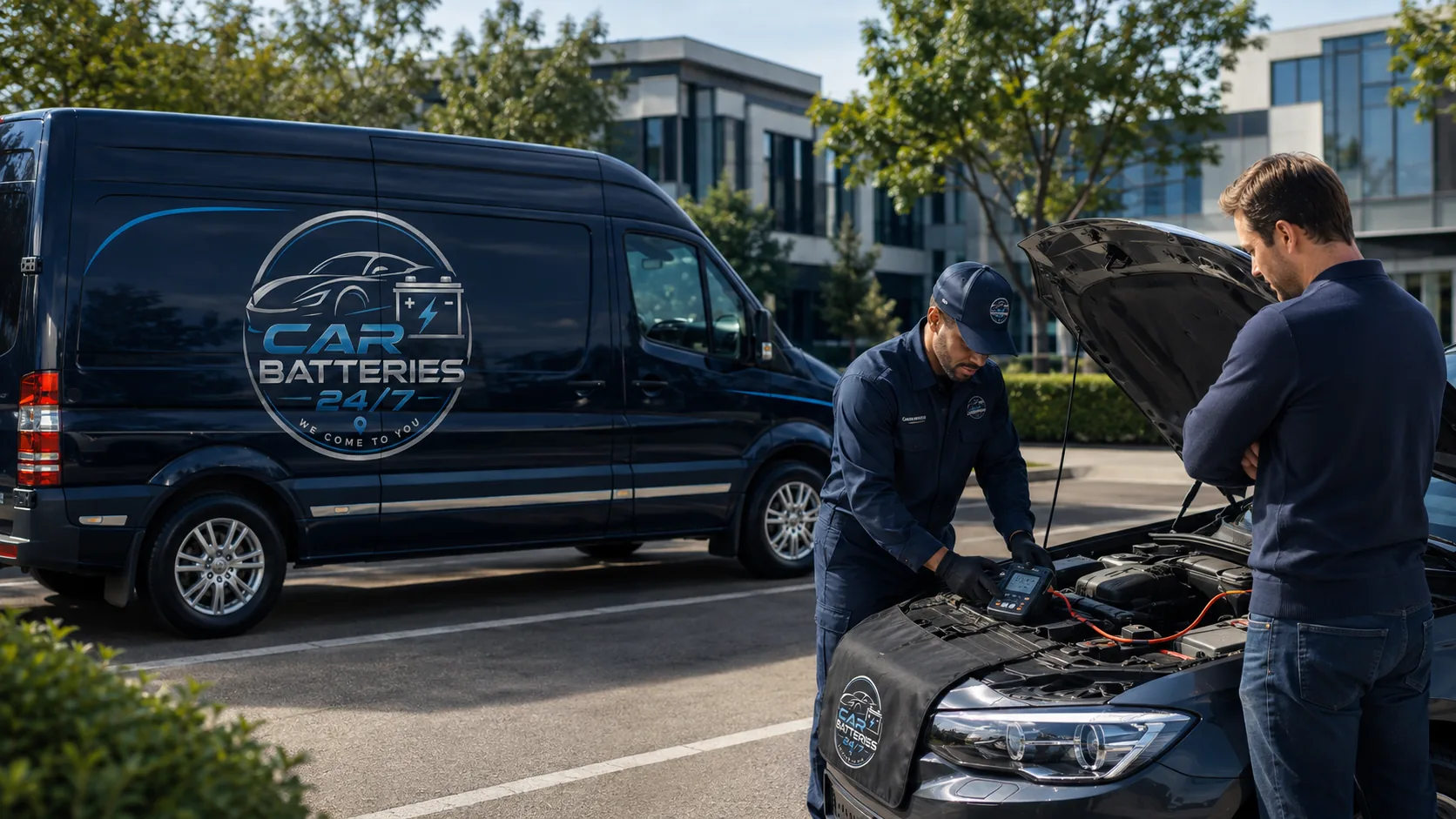
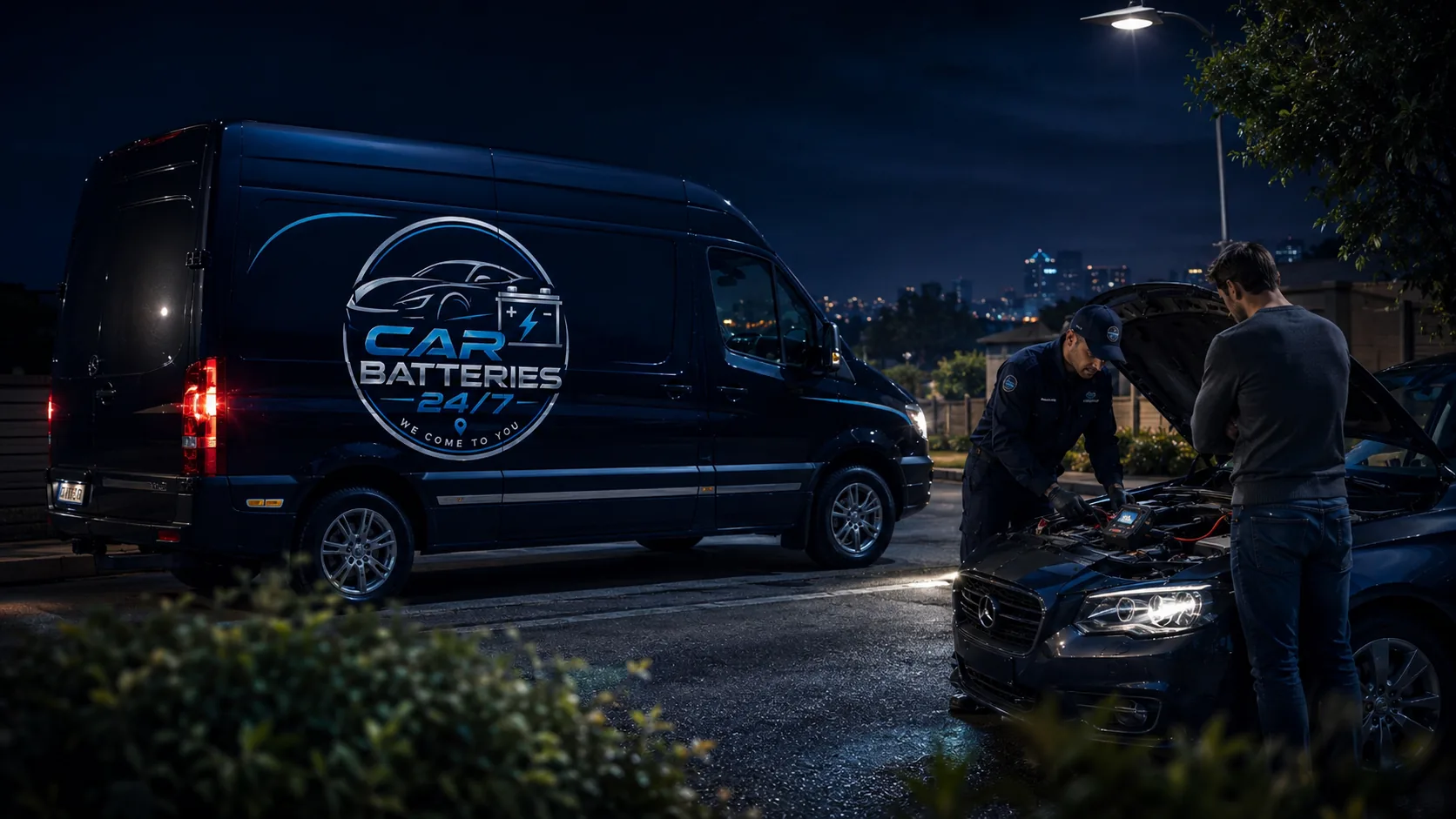
Jump Start and Flat Battery Assistance: What It Can Tell You
Flat battery assistance may include a jump start when suitable. A jump start supplies external electrical assistance so a vehicle with insufficient available battery power may be able to crank and start. It can be useful in the right circumstances, but the result is often misunderstood. A successful jump start does not prove the battery is healthy, and it does not prove that the battery needs replacement.
Car batteries may simply be discharged, it may be deteriorating, or the vehicle may have a charging or electrical issue that caused the discharge. That is why repeated jump starts should lead to testing rather than becoming the normal way the vehicle is started.
When Jump Start Service May Be Appropriate
A jump start service or jump start assistance may be appropriate when the vehicle appears to have insufficient battery power, the location is safe, the vehicle design allows the procedure and there are no visible signs that make battery work unsafe. Vehicle-specific instructions should always take priority.
Some modern vehicles have remote jump points, batteries in unusual locations or electrical systems that require specific procedures. Do not assume that every vehicle should be connected in exactly the same way.
When You Should Not Keep Jump-Starting the Vehicle
If the battery goes flat repeatedly, if the vehicle dies shortly after starting, if warning lights remain on, if there is visible battery damage or if starting behaviour changes significantly, repeated jump starts are not a substitute for diagnosis.
Car batteries, state of charge, terminal connections and charging behaviour should be checked. If the issue appears to involve a parasitic drain, damaged wiring, starter fault or complex charging problem, an auto-electrician or workshop may be required.
Car Starts After a Jump but Will Not Restart
This pattern can happen when the battery cannot retain enough charge, when the alternator is not replenishing the battery adequately, or when the vehicle is switched off before enough energy has been restored. It can also occur with an electrical drain or another fault.
A car battery test is more useful than assuming the battery has failed. The test result and recent history help decide whether charging, replacement or further assessment is appropriate.
Flat Battery Assistance: Flat Battery vs Failed Battery
A flat battery is a battery with insufficient state of charge for normal use. A failed or severely deteriorated battery may no longer hold or deliver adequate energy even after charging. The symptoms can feel identical when the car is parked and will not start.
This is why car batteries that were accidentally discharged does not always need replacement. At the same time, an old or damaged battery that repeatedly becomes flat may be reaching the end of useful service.
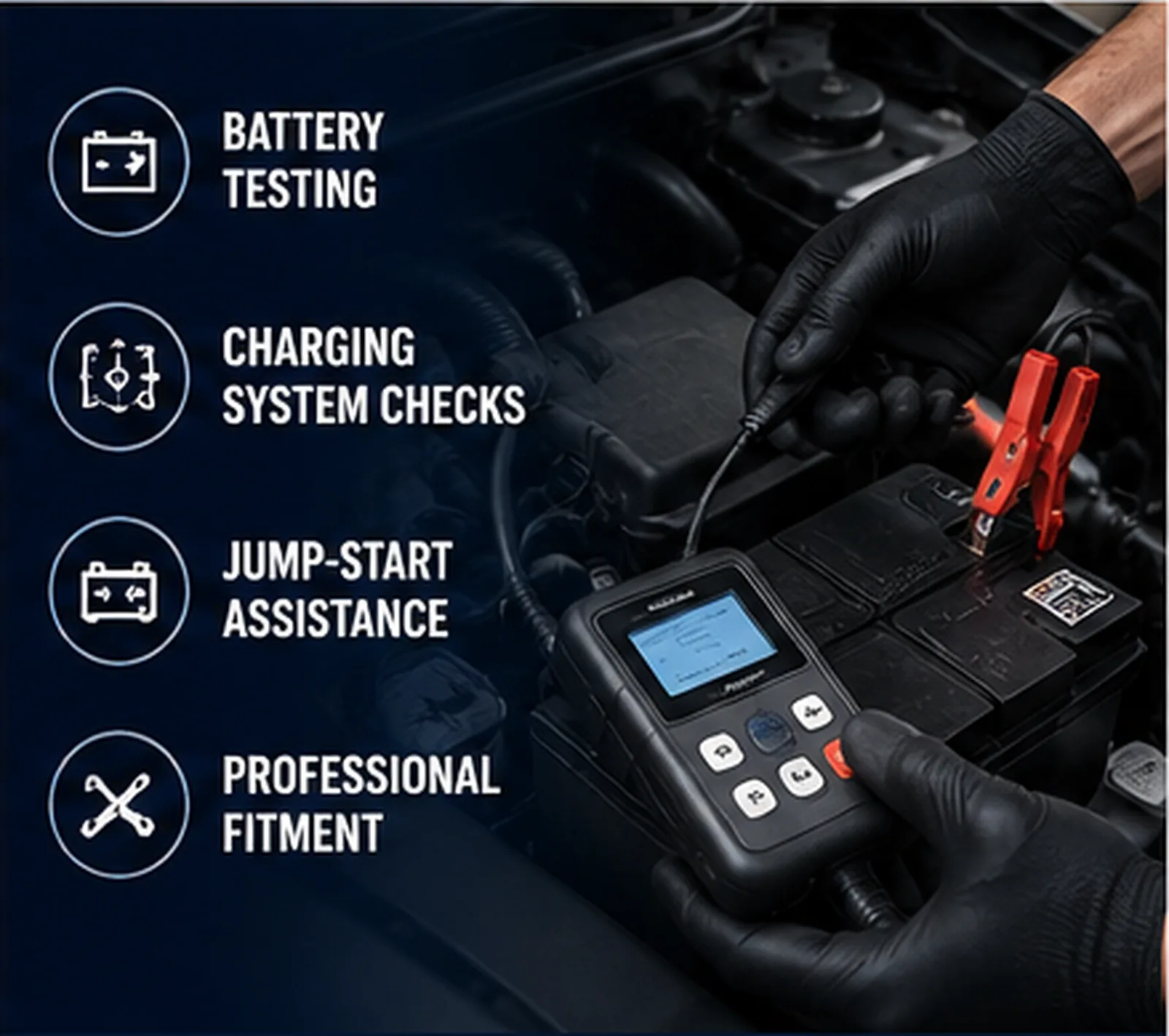
Jump Start and Start-Stop Vehicles
Vehicles with start-stop systems can use EFB or AGM batteries and may have manufacturer-specific jump-start points or procedures. The correct instructions for the vehicle should be followed to reduce the risk of electrical damage.
If replacement car batteries are needed afterwards, the correct battery technology must also be confirmed. See the AGM, EFB and start-stop battery guide for more information.
Can a Jump Start Damage Electronics?
Incorrect connections, reverse polarity, unstable equipment or failure to follow vehicle instructions can create risk to electrical systems. Jump-start procedures should therefore be carried out carefully with suitable equipment and correct connection points.
If the battery is visibly damaged, leaking, swollen, excessively hot or otherwise unsafe, do not attempt a routine jump start. Further safe handling or recovery may be required.
What If the Car Cranks Normally but Will Not Fire?
If the engine cranks at normal speed but does not start, the battery may not be the main issue. Fuel, ignition, immobiliser, sensor or mechanical faults can cause a normal-crank no-start condition.
In that situation, selling a new battery simply because the vehicle will not start would be poor practice. Further mechanical or diagnostic assessment is more appropriate unless battery testing shows a separate battery concern.
Jump Start Service in Johannesburg
Car Batteries 24/7 provides battery-related mobile assistance from Honeydew across the current approximate 30 km service-area reference, including many suburbs in Roodepoort, Randburg and surrounding Johannesburg areas.
Use the service-area checker or send a live location. A location match is a guide only; attendance remains subject to safe access, traffic, operating availability, vehicle requirements and suitable equipment.
When a Replacement Battery Is Needed
If testing supports car battery replacement, the correct battery needs to match vehicle size, terminals, capacity, cold-cranking requirement and technology. Standard, EFB and AGM batteries are not automatically interchangeable.
Use the which car battery do I need guide for compatibility information and the car battery prices guide for a vehicle-specific quote.
What to Send When Requesting Jump-Start Help
Send the exact location, vehicle make, model and year where known, what happens when you try to start, whether the dashboard lights come on, whether you hear clicking, whether the battery has recently gone flat before and whether any warning lights appeared while driving.
If the vehicle is stopped in an unsafe traffic position, move to a safe location where possible or arrange appropriate recovery before battery work is attempted. For general road-safety information, see the South African Department of Transport.
More Help With Car Batteries
For a broader overview of car batteries, testing, delivery, fitment and common no-start symptoms, visit the Car Battery Help & Advice Guide. If the vehicle has repeated flat-battery symptoms, also read the flat battery or car won’t start guide.
Jump Start Assistance Is a Starting Aid, Not a Diagnosis
A jump start supplies external electrical assistance so a vehicle with insufficient available battery power may be able to crank and start. It does not repair a deteriorated battery, recharge a deeply discharged battery fully, or prove that the charging system is healthy. The reason the battery became discharged still matters.
After a successful jump start, pay attention to whether the vehicle restarts normally later, whether warning lights remain on, and whether the battery goes flat again. Repeated boosts indicate that further battery or charging-system assessment is more useful than treating each event as an isolated inconvenience.
When a Jump Start May Not Be Appropriate
Vehicle manufacturer guidance, battery location, electrical sensitivity, start-stop technology and the physical condition of the battery all matter. Do not attempt a jump start where a battery is visibly damaged, leaking, severely swollen, frozen, incorrectly connected or surrounded by another obvious electrical or fire risk. Specialist recovery or workshop assistance may be safer in those circumstances.
Some vehicles have designated remote positive and negative jump points rather than expecting direct connection at the battery. The correct vehicle procedure should be followed instead of assuming every vehicle is connected in exactly the same way.
Jump Start Safety and Location
A mobile jump start should only be attempted where the vehicle can be reached and worked on safely. If the car is stopped in moving traffic or another dangerous position, appropriate recovery or relocation should happen first. The South African Department of Transport provides general road-safety information.
If the vehicle is safely parked and within the operating area, send the location and vehicle details. If the same battery has needed more than one jump start, also request car battery testing so the next step is based on more than the fact that a boost worked.
Jump Start Help When the Dashboard Lights Still Work
A vehicle can sometimes need a jump start even when lights and accessories still operate. The starter motor requires much more current than many cabin accessories, so a battery may have enough available energy for lights but not enough to crank the engine normally. This symptom is useful information, but it is not proof of battery failure.
Rapid clicking or severe dimming during an attempted start can be consistent with low available voltage, while other starting-system faults can produce similar behaviour.
Jump Start Help After the Battery Was Left On
If lights or an accessory were left on, a jump start may restore starting temporarily, but the battery can remain undercharged. Depending on its condition and the depth of discharge, charging and retesting may be sensible before deciding whether replacement is required.
Repeated deep discharge can shorten battery life, so a battery that has been flattened several times deserves a closer condition check.
Jump Start Assistance for Start-Stop Vehicles
Start-stop vehicles can use EFB or AGM batteries and may have manufacturer-specific jump points or procedures. A jump start should follow the vehicle guidance rather than assuming the battery terminals are always the correct connection points. Modern electrical systems are another reason to use suitable equipment and correct polarity.
If replacement becomes necessary afterward, the correct battery technology and any registration requirement must still be confirmed.
Jump Start Help Versus Battery Replacement
A jump start addresses the immediate inability to crank when insufficient battery power is available. Battery replacement addresses a battery that is no longer suitable for continued service. Those are different decisions. Testing can help determine whether the battery should be recharged, retested or replaced.
For testing information, see the car battery testing guide. For replacement pricing, use the car battery prices page.
Request Jump Start Assistance
Send the vehicle details, exact location, what happens when you try to start and whether the vehicle has needed another jump start recently. If the location is unsafe, arrange recovery or move the vehicle to a safe position before battery work is attempted.
Check the current operating reference on the service-area page.
Jump Start Assistance and What to Do Next
After a jump start, do not assume the problem is solved simply because the engine is running. If the battery has a low state of charge, it may need proper charging. If it has deteriorated, replacement may be appropriate. If the charging system is not replenishing the battery, the vehicle can become stranded again even with a new battery.
A follow-up battery test provides more useful information than repeating boosts. See the car battery testing guide or the battery vs alternator vs starter motor guide for the next diagnostic questions.
Jump Start Requests in the Johannesburg Service Area
Mobile jump start assistance is subject to exact location, safe access, technician availability and whether the procedure is appropriate for the vehicle. Use the service-area checker and send the vehicle details before attendance is treated as confirmed.
Jump Start Safety and Vehicle-Specific Procedures
Before any jump start, the vehicle should be in a safe position and the correct connection points and manufacturer procedure should be identified. Modern vehicles can have remote positive terminals, battery sensors or battery locations away from the engine bay, so connecting equipment to the first visible metal points is not an appropriate shortcut.
If there is obvious battery damage, leaking, unusual heat, severe corrosion or another unsafe condition, boosting should not be treated as routine. A technician can explain when a battery test, charging assessment, replacement or specialist recovery is the safer next step. The objective is to restore mobility without creating avoidable electrical or physical risk.
Frequently Asked Questions
Does a successful jump start mean the battery is fine?
No. It only shows that the vehicle started with external assistance. The battery may still be weak, discharged or affected by another charging or electrical concern.
Does a successful jump start mean I need a new battery?
No. A jump start does not prove battery failure. Testing can help decide whether charging, replacement or further assessment is more appropriate.
Can every vehicle be jump-started the same way?
No. Vehicle design, battery location, start-stop systems, manufacturer instructions and electrical sensitivity differ. The correct procedure for the specific vehicle should be followed.
Why did my battery go flat again after driving?
Possible causes include a deteriorated battery, insufficient charging, an alternator or wiring concern, repeated short trips or another electrical drain. Repeated discharge should be investigated.
Can you jump-start a car at home or work?
Where jump-start assistance is appropriate and the location is within the operating area with safe access and availability, mobile assistance may be arranged.
What should I send when requesting jump-start help?
Send the vehicle make, model, year where known, exact location, whether the dashboard lights come on, what happens when you try to start and whether the vehicle has recently needed another jump start.